Join the discussions about products powered by Cognite Data Fusion. Click the + CREATE TOPIC button in the menu bar to start the conversation.
Recently active
Hi all, did you know you can activate Cognite Solutions Portal, your one stop shop to all your Cognite enabled solutions, with just a few clicks? Check out this video for a quick deep dive into the Solutions Portal.I presented the Solutions Portal at yesterday's Product Release Spotlight Webinar as well. I'd recommend you to watch this webinar, for a quick intro to our major December release features. The recording is available for you here.For any thoughts, ideas or feedback on Cognite Solutions Portal, I'd love to hear from you in the comment field below this post
Hi!Im a designer, working on improving the front page of Charts.I would love to talk to 4 of you, to get feedback on our thought so far. I will show you what we are thinking, and you can help us move forward in the right direction.Comment here, or send me a mail to emmy.reehorst@cognite.com We want to do this for more features and improvement in the future. So even though we only need to talk to four of you this time, there will be several more opportunities in the future!
Hey Everyone,I’m Enikő from Cognite Academy. In our team, we create the e-learning courses and deliver the training events you can find on Cognite Learn.I’m excited to share with you the newest content we have just released: Cognite Data Fusion Fundamentals. This is the learning path for you if you’re new to Cognite Data Fusion and don’t know where to start your learning journey. The courses in this path walk you through the building blocks of CDF and help you get started with using the platform through guided hands-on exercises.Check out this article to learn more.
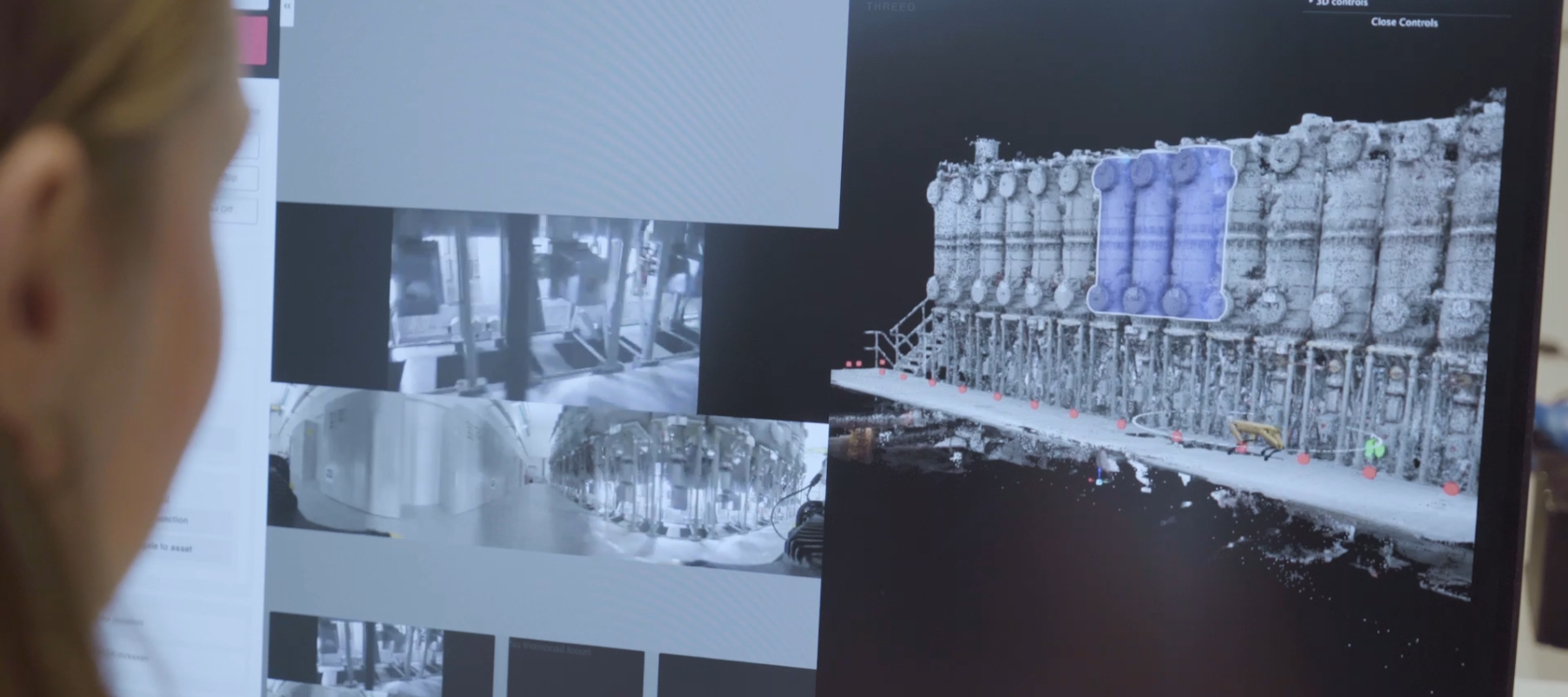
Many tasks in industry are perfect for robots. They are repetitive, located in hazardous or remote environments, and require a great deal of manual data collection. This is a great pain for thousands of industrial companies across the globe, hence also a good opportunity for Cognite. We are in a unique position where we facilitate digital twins for our customers. Hence, we can add context to the data captured by robots - which in turn will enrich the operational digital twins. In this read from Hart Energy you can read more about Solving the Robot Data Problem with Industrial DataOps by Francois Laborie, Cognite President of North America, Cognite Data Fusion (CDF) gives industrial companies a powerful data foundation for automation. With access to sensor data, asset hierarchies, and spatial information in one place, robotics systems — from drones to wheeled and four-legged robots — can connect to digital twins and collect data automatically through their APIs. CDF makes this integra
Thanks to those of you who joined us live for our first webinar in our New Features & Feedback series.You will find the session recording, below, and you can view the slides that we presented by clicking here.We look forward to our next New Features & Feedback session in January 2022!
We, C4IR Ocean, want to become the world’s most important data collaboration hub, advancing both ocean health and wealth…..and being powered by CDF! This Monday, I participated in one of Norway´s most popular knowledge based radio shows, #ekko Norsk rikskringkasting (NRK) P2. The newly appointed Minister for Fisheries and Ocean Policy Bjørnar Skjæran was the main guest for this special edition called "The Ocean Hour". The show is in Norwegian….unfortunately. https://radio.nrk.no/serie/ekko/MDFP02019321I even got some pictures of the minister and me :)
Today we had the first Ocean Data Platform webinar ever due to our close partnership with OPS Seafood Norway (“OPS Sjømat”). We have completed the first phase in our collaboration project and will soon launch a “lusedata” (salmon lice analytics) solution in limited availability to be tested with fish health experts. We have got location data and lice statistics from more than 1000 Norwegian aquaculture locations.Here’s a screenshot from the MVP:
Hi there,I am trying to authenticate the CogniteClient in bluefield using our Azure B2C: response = requests.request("POST", "https://oceandataplatform.b2clogin.com/oceandataplatform.onmicrosoft.com/B2C_1A_ROPC_Auth/oauth2/v2.0/token", headers={ 'Content-Type': 'application/x-www-form-urlencoded'}, data={ "grant_type": 'password', "client_id": client_id, "scope": 'openid https://westeurope-1.cognitedata.com/user_impersonation', "username": username, "password": password,})creds = response.json()client = CogniteClient( token=creds["access_token"], project="oceandata", base_url='https://westeurope-1.cognitedata.com', client_name="cognite-python-dev", debug=True,)This works perfectly :) Edit: I initially asked how to get this working before spotting a typo in the code. Everything works fine now. Leaving the post here so that others may use it for reference.
Hello Digitalization Community! On December 16th from 14:00-15:00 CET, we will be hosting a live webinar to present highlights from the latest CDF release.In this session we’ll:Take a quick look at all new release functionality for December Demonstrate improved data profiling capability, allowing you to understand your data in a visual and intuitive way. Share the new features of CDF for handling visual data and invite you to join the Early Adopter group for these new capabilities. Introduce the Cognite Solutions Portal which gathers all your Cognite Data Fusion enabled solutions in one place, from dashboards, to applications, third party solutions and everything in between.You can RSVP for the webinar on the Events section of Cognite Hub or click here.This is the second webinar in our Product Release Spotlight series. If you missed the October Product Release Spotlight, you can catch up here.See you on December 16th at 14:00 CET!
This is a friendly reminder that we will be hosting our New Features & Feedback webinar today from 15:00-16:00 CET → You can join the Microsoft Teams call by clicking here ←If you have any trouble joining, please leave a comment in this thread or send an email to eric.stein@cognite.com We’ll be giving a deep dive tutorial about the new no-code calculations builder and automatic data alignment, which were released yesterday. We’ll also be hearing from you – our early adopters – with your feedback and ideas for how we might improve upon these features in the future.This session will also be recorded and the video will be shared here in the Early Adopter Group afterwards. The team and I are looking forward to talking with you soon!
Since last week, I have not been able to trigger any transformations via the Playground API.({{baseUrl}}/api/playground/projects/{{project}}/transformations/:id/run)I am getting :404 Not foundwith response body: {"code":4(Yes; a incomplete json)I noticed also that the API has now been included in API v1. Is maybe this error related to this change?Related (?):I can see that when I run a “GET” using the new endpoint, I get the same error ({"code":4). Have you been a bit quick in the implementation and running a GET on the v1 API from the playground API? I can also mention that it does actually work using the new v1 endpoint, so this will solve the problem. My problem is, off course, that I am currently using the Playground API which is currently failing and I have to replace the logic and test/release it (Taking extra time).Working Example:POST {{baseUrl}}/api/v1/projects/{{project}}/transformations/runThe example from Postman is with externalId, so you will have to replace it with “id”
Hi,Some feature requests I would like to see in Charts:-Function like pandas where. We have sensors with for instance zero point error. In many calculations it can be useful to set values bellow a point to zero to avoid larger errors to sum up over time.-When Charts and AIR are integrated it would be nice to have more logic and comparing functions. For instance to set an alarm if only certain conditions are met.-Writing own python code in a function block would have been nice, but I guess that could be a problem with the security?-Text box to comment in the function blocks would be nice.-Xy-plot and table output would be nice. If export to Grafana is fixed the function is available there.-Custom units or more default units in calculations.
Hello Charts community,We have just released a new version of Charts (charts.cogniteapp.com), which is available for all of you to use! Please try it for yourself and, of course, share your feedback here in the Charts group.You can read more details about this release below. You can also read about the other Cognite Data Fusion features that have been released today here.Also, remember to join tomorrow's webinar over Microsoft Teams, where we'll be walking through the details of this release and asking for your direct input and feedback. For details and joining info, please visit this post. Release DetailsA new and improved no-code calculation builder experience (read more below) Numerous bug fixes & improvements included in this feature @Johan this includes the zooming and scrolling functionality that you had requested Automatic data alignment (read more below) Searching for externalID in the search bar will highlight when there's an exact match Updated login page, matching
Hello everyone,I wanted to share a webinar that we’re hosting for our Charts Early Adopter Community on Cognite Hub…When: Wednesday December 8th from 15:00-16:00 CETWhere: Virtually (Microsoft Teams)For whom: Charts Early Adopters→ The invitation for this event is only available to our early adopter community. Not an early adopter? Click here to request access to the Charts [Early Adopter] group.We will be giving an in-depth walkthrough of the newest Charts features — which will be announced in our December 2022 CDF release in the Product Updates here on Cognite Hub — and how to use them. We'll also have an open discussion between our early adopters and the members of the Charts team about ideas for future improvements.The features we’ll highlight in this session will include…Our new, no-code calculation builder with an improved UI and numerous improvements and new features.Automatically data alignment in calculations, so you can spend more time performing industrial data analytics and
Hello Charts Early Adopter Community,You're invited to a webinar where we in the product team will be sharing the latest and greatest features in Charts!When: Wednesday December 8th from 15:00-16:00 CET→ Click here to add the event invitation to your calendar.Where: Virtually (Microsoft Teams)→ We'll be hosting this webinar over a Microsoft Teams video call (click here to join the call) so all of you who attend can directly engage with the Cogniters who are presenting. The features we’ll highlight in this session will include…Our new, no-code calculation builder with an improved UI and numerous improvements and new features.Automatically data alignment in calculations, so you can spend more time performing industrial data analytics and less time worrying about data alignment.I will be giving an in-depth walkthrough of these features and how to use them. We'll also have an open discussion between you, our early adopters, and the members of the Charts team about ideas for future improvem
Hi everyone,We in are running a series where we are challenging the community to model a certain problem in CDF. The aim with this series is to facilitate discussion and invite the community members to share interesting solutions and techniques.In this second entry of the series we will focus on the SpatioTemporal Asset Catalog (STAC).The SpatioTemporal Asset Catalog (STAC) specification provides a common language to describe a range of geospatial information, so it can more easily be indexed and discovered. A 'spatiotemporal asset' is any file that represents information about the earth captured in a certain space and time.The goal is for all providers of spatiotemporal assets (Imagery, SAR, Point Clouds, Data Cubes, Full Motion Video, etc) to expose their data as SpatioTemporal Asset Catalogs (STAC), so that new code doesn't need to be written whenever a new data set or API is released.(source)In C4IR Ocean, we are primarily dealing with geospatial data. The data originates from mult
What are the alternatives for scoping read/write rights to different users?Dataset is the most intuitive way of limiting access rights to subsets of data, but if i would like to share data that is scattered across different datasets, but easily identifiable by sharing a common label, are there any options?
Do you want to learn how your siloed data gets enhanced and made ready for consumption in Cognite Data Fusion? Or, do you want to manage your transformation jobs programmatically?Search no more, we have the new Transformations APIs and SDK available. Join the user group, the entire Data Integrations team is there!As a member of the Transformations APIs and SDK Early Adopter Group, you will: GET ACCESS Introductory courses for data transformation in Cognite Data Fusion, the latest product updates, tips and tricks GET INSPIRED We share use cases and identify best practices BE HEARD We encourage and welcome your feedback BE IN THE KNOW By seeing how your feedback impacts our decisions and get a preview of what we are working on next Hop over to the Group
New to data transformations? The course Integration Fundamentals walks you through the data’s journey from source systems through the staging area to being transformed into Cognite Data Fusion (CDF) resource types. Learn what the typical uses of transformations are and watch a demo the built-in transformation tool in CDF.After completing this course, you’ll be able to:Summarize the data’s journey from source systems to the staging area. Explain why it is important to write data to RAW first. Explain why we use transformations. Describe tools you can use to extract and transform data.This course is independent but also part of the Cognite Data Fusion Fundamentals learning path. We recommend that you complete all courses from this path and take the assessment at the end to receive a certificate of completion and the Onboarding badge here on Cognite Hub.Any questions? Let us know!Let’s go! Integration Fundamentals
Hey there! I am Sunil, Product Manager for Data Integrations. Since this is our first post in the Hub, let me introduce my team and what we do. My team is responsible for the Ctrl+C Ctrl+V of your data from source systems to Cognite Data Fusion . But on a serious note, we are responsible for ELT - Extract, Load, and Transform of data. We are thrilled that you are interested in learning about the Transformations Python SDK. Yayy!In this post, I list a couple of use-cases/scenarios where the python SDK for transformations makes managing and orchestrating transformation jobs simple and seamless. Our goal is to make the transformations SDK more developer-friendly and would like to hear your feedback. Do check out the API and SDK docs for more details, but now on to a few use cases! Use Case 1: Triggering TransformationsCognite Data Fusion helps liberate industrial data silos and provides a unified and contextualized view of the data. It is now easy to derive insights and build application
If you’ve been feeling like that calculations in your Charts are running faster than before… they are!Yesterday, we released a new version (V2) of our calculations backend to production. This update includes numerous performance improvements, bug fixes, and quality improvements.In short, it’s an all-around better experience built on higher quality code.Test it for yourself on your CDF project. As always, let us know in this group if you have any questions or feedback!
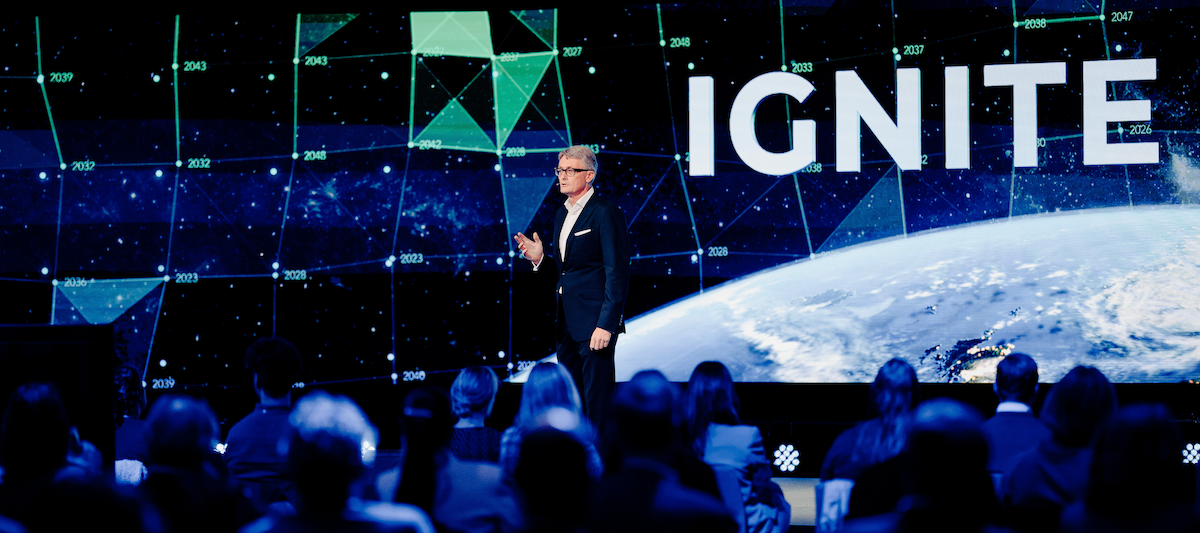
In one of the first in-person industry events since COVID-19, international leaders from across asset-heavy industries took to the stage in Oslo, Norway, on Sept. 21, to present how they are working toward net zero or net negative and the investments they’re making in technology, ESG solutions, and workforce transformation. Set to a backdrop of industrial images juxtaposed with glimpses of majestic nature, the industrial technology and digitalization conference provided a blunt reminder of the world that these net-zero pledges are trying to protect. [Editor’s note: All of these sessions, plus dozens of other Ignite Talks, are available on-demand now.] First on stage was Aker CEO and Cognite Chair Øvyind Eriksen, who opened with a rallying cry:“You’ve made the [net-zero] pledge, but there are only 10,000 days to go,” Eriksen said. “It’s time to discuss the hard issues about what it will take. He added that addressing the challenges “head-on” is what Ignite is all about. In its fourth
Thank you again to everyone who joined us live for yesterday’s Product Spotlight webinar! To those of you who couldn’t make it to the live event or if you want to re-watch, you can take a look at the recording, below.If you want to read about the the details of the October CDF release, you can visit the post in Product Updates by clicking here. We already received some great feedback and we’re happy to hear several of you found the product demo with a practical use case example to be helpful. If you haven’t already submitted your feedback about the webinar, please do so here. We’re reading and discussing each response so we can make all of our future product webinars as valuable as possible. We’re already planning a new event about Charts, exclusively available for all of you in our Early Adopter community, so stay tuned for updates and invitations.Have a great rest of your week, everyone!P.S. We also appreciate everyone’s patience with the technical difficulties that were experienced
My name is Sigrid Schaanning, and I have written this post together with Atussa Koushan. We both work as Software Engineers in Cognite’s Disruptive-MVP team, which focuses on robotics and computer vision. In this post, we will look further into how to develop a computer vision model, from gathering data to deploying the model on a robot. First, let’s set the scene for what we are trying to achieve in this post.Imagine performing routine inspections at an industrial facility or an oil platform. You might have to read and note down the values of multiple gauges three times a day - every single day. Or, you might have to inspect different parts of the facility to check for corrosion or wear damage.Routine inspections could be tedious and repetitive work, and it might take place in surroundings which are dangerous to humans.Robots, on the other hand, have no perception of tedious work and they could also operate in hostile environments. Robots, together with computer vision, constitute a p
Hello Charts Group! On November 3rd 15:00-15:45 CET, we will be hosting a live webinar to present highlights from the latest CDF release, with a special focus on CHARTS AND THE CHARTS EARLY ADOPTER GROUP.You will learn about why we’re building Charts, what problems it can solve, and how to use key features and functionalities. We’ll demonstrate how to leverage this new CDF functionality as we build and solve real use cases in Charts step by step. From finding the relevant data, to using P&IDs to gain a systems understanding, to configuring the chart, to creating the no-code calculations to solve the problem at hand. This will be an interactive session for asking questions, discussing ideas, and providing feature requests directly with the team. By the end of this session, you’ll feel confident about using Charts in your day-to-day work and feel empowered to think creatively about the solutions you could build to shape a safer, more efficient, more sustainable industrial future.You


 Check the
documentation
Check the
documentation Ask the
Community
Ask the
Community Take a look
at
Academy
Take a look
at
Academy Cognite
Status
Page
Cognite
Status
Page Contact
Cognite Support
Contact
Cognite Support