Join the discussions about products powered by Cognite Data Fusion. Click the + CREATE TOPIC button in the menu bar to start the conversation.
Recently active
Hello Digitalization Community! On November 3rd 15:00-15:45 CET, we will be hosting a live webinar to present highlights from the latest CDF release, with a special focus on CHARTS AND THE CHARTS EARLY ADOPTER GROUP.You will learn about why we’re building Charts, what problems it can solve, and how to use key features and functionalities. You’ll also have the opportunity to join our private early adopter group for Charts. By the end of this session, you’ll feel confident about using Charts in your day-to-day work and feel empowered to think creatively about the solutions you could build to shape a safer, more efficient, more sustainable industrial future.You can RSVP for the webinar via the link below:This is the first webinar in our Product Release Spotlight series, so you can expect many more after our bi-monthly CDF releases in the future. See you on November 3rd at 15:00 CET!
Hi Community Friends! We thought it might be nice to know who’s who, while we’re actively engaging in our community. I’ll start! My name is Anita, and I’m your Community Director. I joined Cognite in September 2020, and jumped right on the mission of establishing Cognite’s customer community. I’ve worked in a variety of industries, and am passionate about working at the crossroads of sustainable business development and digital transformation. I live in Lommedalen, Norway (translated “the Pocket Valley”), where we have long winters with deep snow. I love horseback riding (Islandic horses in particular), and I have a passion for Italian wine and food.Here’s a fun fact: my grandfather’s brother, who was raised in the remote mountains of Hallingdal in Norway, worked as a chemist with Thomas Alva Edison. The letters he wrote home made me realize from early on that no matter your background, you can change the world. I’m super excited to facilitate for all of you to meet, discuss and learn
Hi everyone,We in C4IR Ocean are starting a series where we are challenging the community to model a certain problem in CDF. The aim with this series is to facilitate discussion and invite community members to share interesting solutions and techniques.The first challenge focuses on Open LineageOpenLineage is an Open standard for metadata and lineage collection designed to instrument jobs as they are running. It defines a generic model of run, job, and dataset entities identified using consistent naming strategies. The core lineage model is extensible by defining specific facets to enrich those entities.In C4IR Ocean, we are dealing with data from multiple providers. Some datasets are open and publicly available, others are closed. It is therefore important to keep track of where data is coming from, and what transformations have been applied to the data after it is read from the provider.We are seeing a good landscape of data lineage solutions - both open and closed source. At the sam
One of the main objectives of the first deployment with an inspection robot is getting your organization ready for robotics. A properly scoped deployment will contribute to engaging the field workers and provide insights on what it takes to keep robots operational on a day-to-day basis. This will lay the foundation for high return on investment for all the following deployments. If the scoping fails, there is a risk of losing trust in robots and gaining less willingness to change in your organization. But fear not. In this post, we’re summarizing our best practices when assisting our customers to scope out their first deployment of an inspection robot. Selecting the appropriate area of deployment It is common that there is a need to deploy robots in harmful or remote environments. These can be areas that may be highly corrosive, have a risk of explosive gases, have powerful magnetic fields, radiation from heat or nuclear etc. When selecting the appropriate robot for a plant, we reco
In the CDF docs I see there is a PI and OPCUA connector. Many industry 4.0 community members see MQTT rather than OPCUA as the future of Industrial IoT cloud based communication, as it is lightweight, report by exception, client driven, etc…If I want to onboard a facility that has an IoT MQTT gateway, how does Cognite recommend we integrate? I have used Azure IoTHub and Azure Functions to connect and transform the data in the past. Do you have a reference architecture for this? Can we connect to the gateway directly with a CDF connector, or do you recommend using Azure IoTHub and Functions (or similar GCP/AWS)?Also Azure has some neat tools like IoT Device Provisioning Services, be nice to know a POV on if/how to utilize those. Thanks!
The majority of the hydropower fleet is pretty old. It’s not uncommon to see a 100-year-old power plant still in operation. While it may be a great piece of engineering, how can you access operational data on your laptop or smartphone? After all, you may not want to travel every day to very remote locations. At Ringerikskraft’s Hønefoss II power station in Norway, we installed a set of cameras to passively record alarm events, read gauges, and stream this information to Cognite Data Fusion. It is all connected, so if an alarm goes off, I get an SMS notification and can quickly look up what is happening. Pretty cool, or what? I would like to hear your thoughts. How have you tackled the challenge of digitalizing aging infrastructure?Read the full story
Hi there,I am looking for resources on CDF templates API.So far I the best introduction I have found is the Python SDK documentation, as well as the information at docs.cognite.com which focuses on using templates in fusion.Can you provide more information about how to use the templates API?
I am trying to stream data from CDF to Azure Event Hub with the Python SDK and cannot find anything related to streaming datasets. Only option so far (as I know) is dps = c.datapoints.retrieve_latest(id=184691546499795)which would need a trigger of some sort to keep running. Data from CDF are so called timeseries from different types of sensors. Is there any documentation on Streaming Data for CDF that I could look at or is Streaming really supported?
Hi, When developing with the Cognite python SDK, a common restriction is the API imposed restrictions on queries. Quering time-series, for example, is restricted by 100 asset-ids. I believe the Python SDK should recognize these constraint violations and batch / concurrently dispatch requests in chunks that do not violate constraints. Optionally with a performance-warning to the developer.Is this sane, or do you think that the developer/customer should maintain a wrapper on the SDK for batching each endpoint (as we’ve currently done at Statnett)?
The digital twin is the foundation for industrial digitalization efforts, delivering real-time insights, accurate forecasting, and intelligent decision-making. In the almost two decades since the term was invented, industry - and the world - have changed dramatically. So what’s next for digital twin technology? Johan Krebber, IT Strategist at Cognite, summarized his perspective on the evolution of the digital twin concept during a panel at Ignite Talks, 2021’s big industrial digitalization conference. Read below an extended expert interview between Johan and Petteri Vainikka, our Vice President of Product Marketing, on the future of digital twins.Hello, Johan! Thank you, for taking part in our panel at Ignite Talks and especially for taking the time to do a deep-dive interview to expand on your contributions to the panel! Let’s start with a lightning round question. All I need is a simple yes or no. You’ll get to elaborate in a second. Should we sunset talking about digital twins and
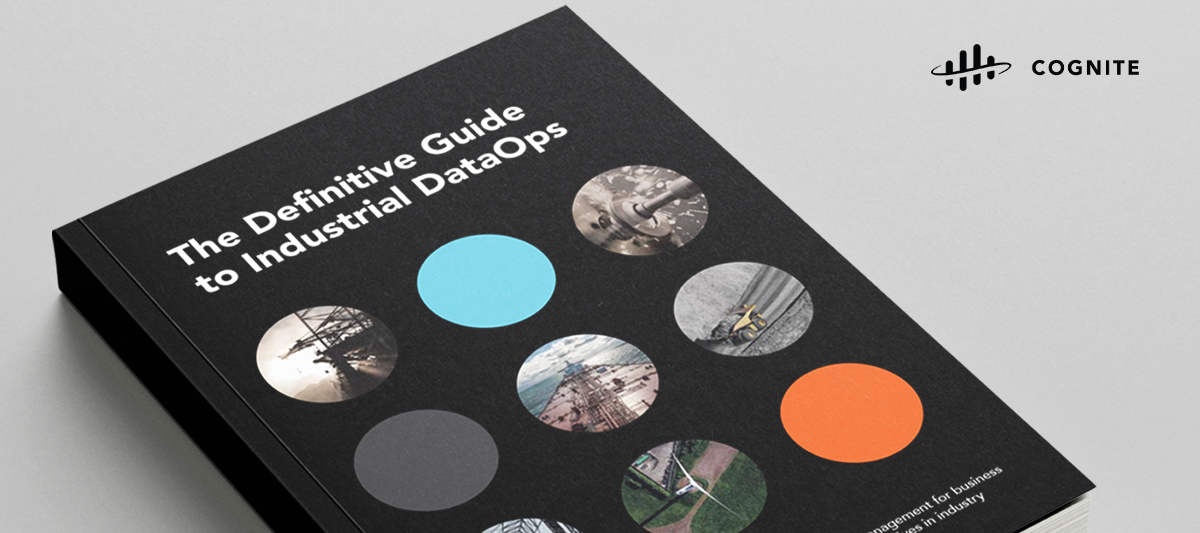
Did you know that only one in four industrial organizations extract value from their data? The lack of tools and processes to connect, contextualize, and govern the data often stand in the way of industrial digitalization. Industrial DataOps is a powerful new way of deploying data and technology to transform an industrial organization. It makes sense of, manages, and extracts value from complex industrial data. And it is is already becoming a driving force in industrial transformations, helping accelerate digital maturity, enabling data teams to deliver more digital products, and realizing more operational value at scale. In a 2020 survey of global companies, McKinsey found organizations that embedded DataOps could see the volume of new features increase by 50 percent because data automation enables quicker development iterations. At Cognite, we’ve released the first-of-its-kind Industrial DataOps book - a guide packed with insights, industry expertise and practical advice on how you
If a user includes https:// or http:// in the Override Azure Tenant field the url to Azure AD will not include a correct tenant and login is prevented. This has caused login issues for at least a few users. The request is simply that the form is modified to strip the protocol scheme, ie removing http:// or https:// automatically, if present.
Hey, In our current workflow we’re expanding the use of Functions as a tool. We’re somewhat hampered by how “clumsy” it is to bundle and version control proprietary dependencies. Is there something in the pipe to address this issue? Kind regards,Robert
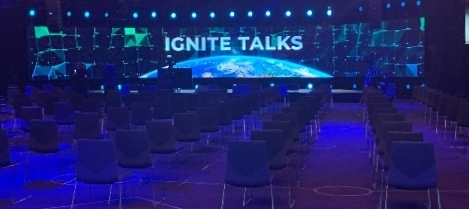
We’re excited to host our fourth global conference, Ignite Talks on September 21-23. We’d like to invite you to this virtual hybrid event, which will bring together global leaders and innovators from technology, industry, and government who are dedicated to meet the carbon net-zero 2050 deadline and create a more innovative, data-driven, sustainable future. You can view every session live or on your own time. The three-day industrial digitalization conference, co-located in Asia, Europe, the Middle East, and the United States, will focus on the innovative technologies that power industries like oil and gas, power and utilities, and manufacturing and enable renewable energy development. You can expect conversations on Industrial DataOps and forward thinking technologies like robotics, artificial intelligence, and data analytics, as well as deep discussion on how to drive profitable sustainability.“As the energy industry reinvents itself and deploys new technologies, we know that data w
Hey!In our tooling for the power-analyst we make computations using the SyntheticTimeseries API. Results from these are used in subsequent analysis, where we have identified a problem for us. When a synthetic timeseries is computed with a specified aggregate and resolution, that specification is returned irrespective of there being data on the originating timeseries. In our case, we compute aggregates over long stretches of time which results in situations like the image below: In the figure, the opaque line is the comptued by addition of the two other signals. Spanning over roughly a year, the period in the middle has a linear rise in the SyntheticTimeseries while the originals are empty. These values are of course meaningless and should be omitted in the successive steps of the analysis. Have you considered implementing a density filter or the like for these types of situations? Or, do you believe this is best solved client side by identifying the holes prior to a set of Syntheti
McKinsey Quarterly did post an interesting set of articles recently, regarding the transition and change management when looking into digital services. I believe some of the topic and views could be interesting to reflect upon. Go here to find out : https://www.mckinsey.com/business-functions/mckinsey-digital/our-insights/five-fifty-so-you-want-to-be-a-software-company?cid=other-eml-alt-mip-mck&hdpid=034603b3-3fba-4313-a963-553dca543b0f&hctky=12386931&hlkid=8635b3c5c91d439a8a47f0bf353a4968
How a DataOps platform can boost improvement in all parts of the business! And this time is focusing on what is most important - HSE!https://www.pgs.com/investor-relations/ir-news-stock-announcements/pgs-digitalization-initiative-improves-crew-safety/https://www.cognite.com/customers_stories/dataops-in-action-improving-vessel-crew-safety One more big shout out to @Cerys James and @Sverre Olsen ! Congratulations for another amazing use case!
Hey! I’ve a problem with filling a gap from a source to a timeseries in CDF. Problem descriptionWe’re filling a hole in a time-series from time A to B. There are some datapoints on the edges of the interval in CDF.Data is extracted from the source, and in python prepped for the datapoints API as a list-of-tuples payload. For an arbitrary period I extract 2976 datapoints which I upload to CDF. Subsequently, I query the time-series for the same period of time and recieve 2928 datapoints. There are no NAN values in the input for either the date-time or value. The data is also hourly, and so I’m wary of it just being an edge effect of poor timestamp specifications for the retrieval. What other PEBCAK things have I missed? Simplified example included below:payload>> [{'externalId': 'ts_externalid', 'datapoints': [...]}]payload[0]["datapoints"][10]>> (1617271200000, 0.0)client.datapoints.insert_multiple(payload)meter_data = client.datapoints.retrieve( start=dates[0], end=dat
It's been a while, but as promised, here is the follow-up post to my previous article. If you haven't read the previous article, you can find it here.In the first part, I shared the basic concepts about data integration. Today I will continue on the same theme, but the focus will be on latency and frequency. They are related concepts, but not necessarily the same. Why latency and frequency? They are crucial to defining your data pipeline, and they influence which Azure resources you use to cover your needs.What is data latency and frequency? Data latency is how fast/slow data can be retrieved or stored. Low latency means that the data is available in real-time or close to real-time and is vital in use cases where you need to respond quickly to information. Examples are alerts for critical events on machinery and equipment and online games based on real-time experiences. This leads us to the data frequency concept. Data frequency is how many times in a specific period the data should b
Hi, my name is Kine Årdal, and I have the privilege of being the Customer success manager for Neptune Energy. I’d like to share experiences from our latest project, and hoping to get feedback and hear about similar experiences from you in the community. The project kicked off in April, as a12-weeks proof of concept, where we enabled a collaborative environment with seamless data flow of key well data for well planning.Current workflow: In the current well planning workflow, it is challenging to share data efficiently and reliably across disciplines and collaboration partners. There is no central storage of drilling and well data ready for a digital way of working, and data is often stored in silos. In addition, the collaboration with vendors often relies on manual exports/imports, sharing data on e-mails/ftp, which leads to e.g. unnecessary time spent waiting for data, duplication of data and a challenge to keep track of versions.Result: In this project, the initial Neptune well data m
There are two discomforting truths within digital transformation across our key industries; energy, utilities, and manufacturing.Digitalization PoCs are commonplace. Real ROI isn’t. Billions are invested in cloud data warehouses and data lakes. Most data ends there, unused by anyone for anything.At the heart of this data-driven value dilemma lies a confluence of challenges, ranging from the technical (How can we best organize our diverse and fluid data universe?) to the operational (How can we create new information products and services?), to the financial (How can we treat data as an asset?), to the human (How can we improve data literacy and ensure digital solution adoption in the field?).Read also: DataOps: A transformative new approach to data ROITo avoid boiling the ocean, we will focus on what is perhaps the most fundamental question all fellow Chief Data Officers and other digitalisation executives need to consider as their Northstar — and in doing so, we will find ourselves on
We are looking into cloud-optimized storage formats such as GeoTIFF, Parquet, etc. One of the things we are trying to determine is whether we could fully utilize such cloud optimized formats with CDF Files.Will the download-link returned by CDF Files allow us to do seek-operations and only download parts of the file?
Hi. I’m currently working on an application where we need to check if a node (PLC/PC) have updated any timeseries within x amounts of hours. The way we do it now is to get all timeseries recorded values in a time range, and check if any timeseries have any values. If there is an value on one timeserie, then we consider the node alive. This can be time consuming, since each node can several hundreds/thousands of timeseries. So my question is if there is a way to get the latest recorded value in a collection of timeseries within a timerange? Or just a recorded value in a timerange for a collection of timeseries. In Cognite, we have an asset hierarchy, which preferably would look like this:RigNode 1 TimeSerie1 TimeSerie2 ... Node 2 TimeSerie1 TimeSerie2 ... Node ... TimeSerie1 TimeSerie2 … But the hierarchy could also be completely flat, where all the timeseries are connected to the Rig. Our externalIds for the timeseries are:rigNumber.NodeNumber.SignalNumber So all timeseries wit
Most people are talking about DataOps as if it’s an idea that emerged in the last 5 to 10 years. But according to Rolf Thu, it’s something Aarbakke, a world-leading mechanical solutions supplier to the oil and gas industry, has been thinking about since the early 2000s. Thu says what’s today known as DataOps has been long in the making — people just didn’t know what to call it. For Aarbakke, it’s been a steady evolution, introducing digital solutions step by step over the years until the company emerged as the “smart factory” it sees itself as today.“I joined Aarbakke in 1989, and the theme throughout my career has been learning,” Thu said. “And what we’re doing now with data is also about learning. We are learning from best practices, we are increasing the competence of our employees, and we are constantly seeking improvements for our factory through better and smarter uses of data.”Can you explain more about how you use the data to achieve more at Aarbakke?RT: With the powerful data
Hi all,take a look at https://properate.com/, the landing page for Properate. This is the solution Energima have built on CDF. Remember to watch the landing page embedded video :-)Energima is taking full advantage of several CDF services and Properate includes a stack of cool features!


 Check the
documentation
Check the
documentation Ask the
Community
Ask the
Community Take a look
at
Academy
Take a look
at
Academy Cognite
Status
Page
Cognite
Status
Page Contact
Cognite Support
Contact
Cognite Support