Join the discussions about products powered by Cognite Data Fusion. Click the + CREATE TOPIC button in the menu bar to start the conversation.
Recently active
Hi Team, We have deployed Grafana on Azure using Grafana Labs available under Azure Marketplace.We need to install “Cognite Data Fusion” Plugin, but the plugin is not available, and we are unable to install it.Could you please let me know how to install “Cognite Data Fusion” Plugin for Grafana labs on Azure.PFA screenshot for the same. Also, please let me know any alternative ways to deploy grafana on Azure which has “Cognite Data Fusion” Plugin already installed. Thanks & Regards,Swati Mane
Hello,I wanted to checkout on any upper limits for following if limit exists.Max no of Schemas that can be created in one Data Model in FDM Max no of fields that could be added in one schema Max no of Data Models under one project Also any other limits around the data size or count or number of records that could be fetched in one query or anything related in general if exists.Please help us out with these numbers, this would help us to plan accordingly!
Today is the December release of Cognite Data Fusion. As you might have seen in last week’s Product Tour or read in today’s release post, there are several new and exciting Charts-specific updates in the latest release, namely...Charts is now an integral part of Cognite Data Fusion (fusion.cognite.com).A long awaited improvement, charting and no-code analytics finally lives alongside all other industrial DataOps functionalities available in Cognite Data Fusion. No URL switching and additional sign-in required.For those of you who have been using Charts before, all private and public charts that you and your colleagues have created will still be available via Cognite Data Fusion (fusion.cognite.com).Note that charts.cogniteapp.com will still work and be available. This teams, for those of you who are linking to Charts in your third party applications, Microsoft Teams, etc., this will still function exactly as expected. We will be working on an automatic redirect for coming releases, how
Hi,We are working on POC to build spotfire dashboard on top of CDF for which we are trying spotfire oData connector to trigger CDF APIs. But it returns error code: 426 (attached screenshot).plus, how we can authenticate cdf apis here? oData provides only 3 authentication methods - username/password, windows authentication, Microsoft azure marketplace.
Hi could you share an example of a transformation to load a type that has multiple links to another type? All the examples I’ve seen only set startNode and endNode but no place to specify which field. For example:type Composite { frontPart: Part backPart: Part}type Part { ...}
Hi, there! At Cognite, our customers are at the center of everything we do. Our goal is to help you to solve the industrial data problems daily. It's all about you & your industrial data. To make sure we're giving you the best experience possible with the Flexible Data Model (FDM), we'd like to learn about your FDM expectations. Please spend a few minutes to share your thoughts with us in this short survey. The information you give will be confident, so be honest. We really want to know what you think. The survey 👉 https://forms.gle/d8BzpW4jmG4YN9kSA Thanks for your help! Cheers,On behalf of the FDM team
If you are curious on how to get the most out of your Cognite Data Fusion subscription, you have come to the right place. This is part of a series of posts where we share some of our experience from working with customers in their journey towards an Industrial DataOps organization. We want to share lessons learned, mistakes made, good practices observed, and observations of pitfalls and risks. This is not the absolute truth, but hopefully a way to spark good discussions around an inherently complex topic!To quickly introduce ourselves, we are @Arjo Oosten, Digital Transformation Leader, winter sport addict and passionate about driving hands-on digital growth strategies and value based decision making, and @Karolina Luna, Solution Architect, cat lover, and passionate about the lifecycle perspective of everything (like solutions and data products).To learn more about Cognite Data Fusion, we recommend this post. Cognite’s Solution SupportWe have presented some models for organization we h
I created a data model that contains an interface (this is to allow polymorphism). When a type references the interface then the the Data Management table shows this error:It seems the UI relies on every reference to contain an externalId field, and that this field is implicitly defined for types but not for interfaces, as the GraphQL query returns with this error: "Validation error of type FieldUndefined: Field 'externalId' in type 'Twin' is undefined @ 'listEquipment/items/twins/items/externalId'"In the above Twin is an interface type, and Equipment contains a field which is a reference to an array of Twin.
We are getting error while deployment. We have tried reformatting in local with black. Also while committing we are getting error fatal: Authentication failed for 'https://gitlab.com/pycqa/flake8.git/'. Project is in repo of team member, I have already given access to the samefatal: Authentication failed for 'https://gitlab.com/pycqa/flake8.git/'
I see in videos you can click/drag on the chart to zoom the time axis. When I try that it will only allow “panning”. Is there some mode I need to set? I see that the mouse scroll wheel does zoom the chart but the click drag would be beneficial.
Is there a way of dividing a time series in Grafana over say 7 days into separate predefined time intervalls (e.g. 1 day) without aggregate the data in the time series over 24 hours? I guess what I am looking for is to create 7 different queries for the same time series over a defined time range (7 days) in Grafana, defined for each day in that time range, and then find the difference between the first and the last data point in each query for the specific time series.
Hello, I found very interesting that a lot of the conversation around digital has moved away from “AI will change the industry” to much more elaborate analysis on the importance of data in context and data orchestration/DataOps. This realization is making its way all the way to the board room.A good example comes from the recent conversation between Blake Moret (CEO of Rockwell Automation) and Olivier Le Peuch (CEO of SLB). Both companies have independently decided to partner with Cognite and you can find some of the rationale in their exchange below.Two additional notes from the discussion:There is a vision to move from an equipment centric digitalization to a full asset/system view of what digital should encompass - with automation/closing the loop as a key actuator (see Sensia’s control systems’ role), The discussion around optimization has stopped being solely about production volumes but now also systematically includes carbon. Source: Partial transcript from Rockwell Automation'
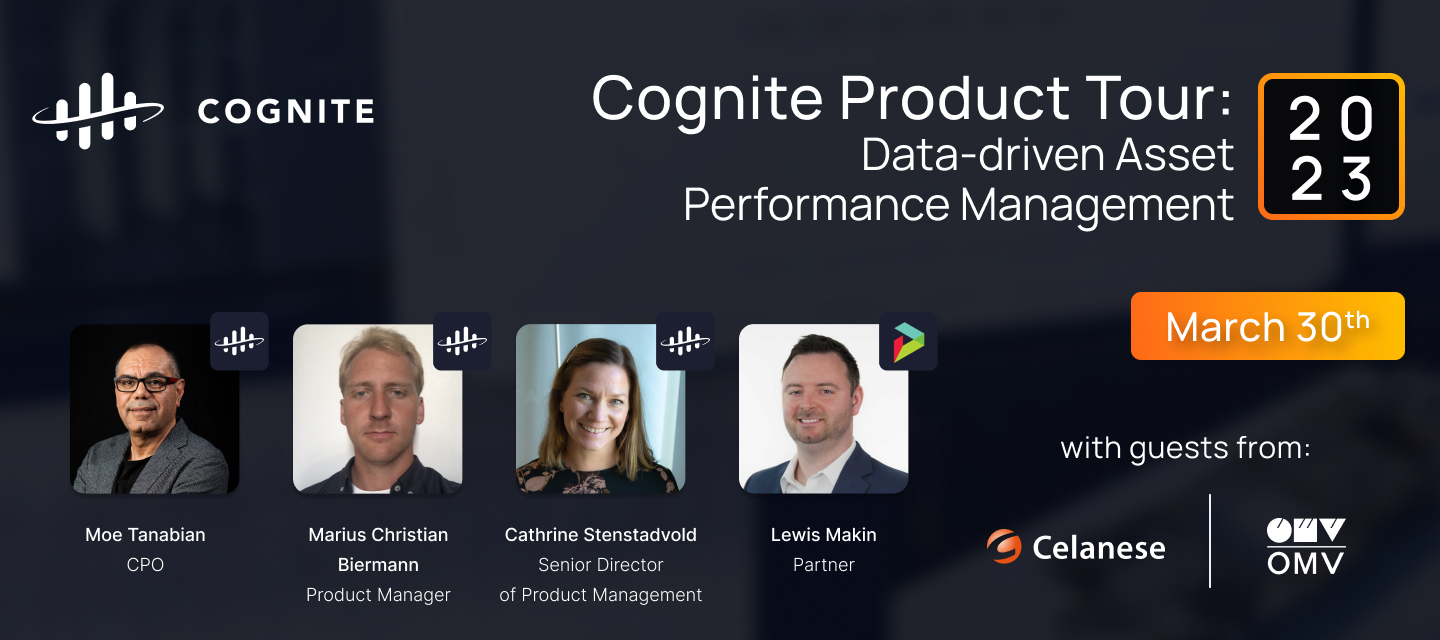
We’d love to hear from you already now with your questions and expectations for the Cognite Live Product Tour 2023 that will take place March 30th! Let us know your thoughts in this thread 🚀 If you haven’t already signed up, you can do so here. Looking forward to hearing from you and hope to see you there!
I was trying to complete the Cognite fundamental modules. I am getting the below access denied error only while doing the last 3 labs. Could you please assist for the same?
Does Cognite CDF have a standard PowerApp connector read/write? if not can we build one.
If you are curious on how to get the most out of your Cognite Data Fusion subscription, you have come to the right place. This is part of a series of posts where we share some of our experience from working with customers in their journey towards an Industrial DataOps organization. We want to share lessons learned, mistakes made, good practices observed, and observations of pitfalls and risks. This is not the absolute truth, but hopefully a way to spark good discussions around an inherently complex topic! To quickly introduce ourselves, we are @Arjo Oosten, Digital Transformation Leader, wintersport addict and passionate about driving hands-on digital growth strategies and value based decision making, and @Karolina Luna, Solution Architect, cat lover, and passionate about the lifecycle perspective of everything (like solutions and data products). To learn more about Cognite Data Fusion, we recommend this post. DevOps and Industrial DataOpsBoth DevOps and DataOps have many different def
We have been discussing with one of our customers the need for a course, similar to the excellent Cognite Data Fusion Fundamentals course, but with less of a technology slant. It would be great to hear your thoughts on this and any topics you think this should cover.
Hello All,I am trying to query the FDM schema after populating (listForecast in slb-pdf project). But i am getting the error! seems like an bug. Can you check if I am doing something wrong.query MyQuery { listForecast(filter: {oilRate: {eq: 1.5}, and: {gasRate: {eq: 1.5}}}) { edges { node { id } } }} Error I am getting is as below. Can you help if known bug or if I should do differently? "message": "Expected either 'and', 'or', 'not' or a single field condition used in the same filter block.",
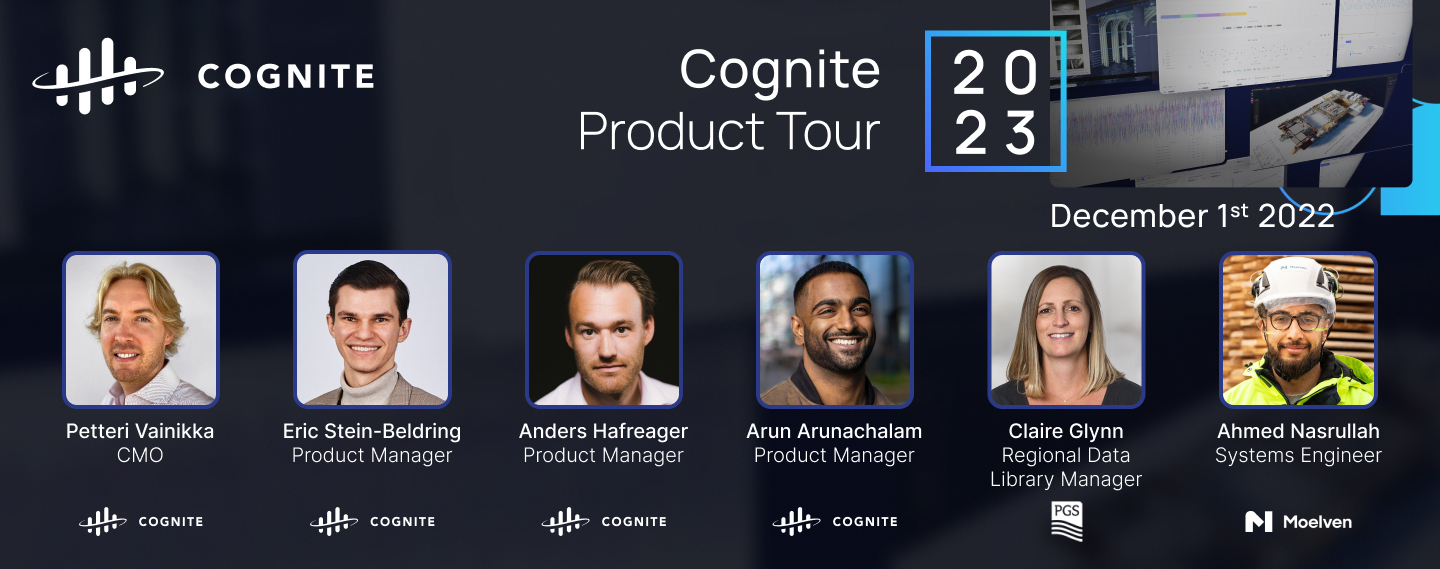
The Cognite Live Product Tour 2023 is just over a week away! This event is our annual showcase of Cognite Data Fusion functionalities – both those that will be released in our upcoming December 6th release, and looking ahead at what is to come throughout the new year. We’ll be driving a discussion with you – our community – about Industrial DataOps and the value of empowering Subject Matter Experts in the industrial organization. We hope you’re looking forward to the event as much as we are! Below is an outline of some of the exciting topics we’ll be discussing. WATCH THE COGNITE LIVE PRODUCT TOUR 2023 RECORDING INDUSTRIAL DATAOPS AND THE SUBJECT MATTER EXPERTIndustrial DataOps is about breaking down silos and optimizing the broad availability and usability of industrial data. Learn about why we are focusing on enabling the Subject Matter Expert throughout 2023 and the two main challenges that SMEs in every industrial sector face. COGNITE DATA FUSION: HIGHLIGHTS OF OUR DECEMBER 2022
If you are curious on how to get the most out of your Cognite Data Fusion subscription, you have come to the right place. This is part of a series of posts where we share some of our experience from working with customers in their journey towards an Industrial DataOps organization. We want to share lessons learned, mistakes made, good practices observed, and observations of pitfalls and risks. This is not the absolute truth, but hopefully a way to spark good discussions around an inherently complex topic!To quickly introduce ourselves, we are @Arjo Oosten, Digital Transformation Leader, winter sport addict and passionate about driving hands-on digital growth strategies and value based decision making, and @Karolina Luna, Solution Architect, cat lover, and passionate about the lifecycle perspective of everything (like solutions and data products). To learn more about Cognite Data Fusion, we recommend this post. Outsourcing FTW?As many companies have found, it can be hard to attract the
In grafana, we want to display total of all timeseries data-points for all assets connected to particular asset for which we are passing query like this:ts{assetSubtreeIds=[{id=$Org4}], name='oil-production-rate'}where value of $Org1 is coming from dashboard variable.and since cognite grafana plugin does not handle cursor api responses and synthetic timeseries api have some limitation in returning 10k records only in a request, to reduce number of data-points, we are trying to use aggregation: ‘sum’ and granularity: ‘30d’ since there could be more than 10k data-points. But its is throwing error saying “sum” is not valid aggregation type of synthetic timeseries. Any reason why “sum” aggregation is not supported for synthetic timeseries.(screenshot attached)
Hi, I am currently doing my Data Engineer Basics - “Learn to Use the Cognite Python SDK “ Course. while executing the notebooks, getting below error with the first “List” notebook even after successful Cognite client authentication.CogniteAPIError: Resource not found. This may also be due to insufficient access rights. | code: 403 | X-Request-ID: 52b3d730-caea-9d32-bfc4-649041e43c3e Note: I am not using Poetry as I am not getting option to change Kernel in my Jupyter.
If you are curious on how to get the most out of your Cognite Data Fusion subscription, you have come to the right place. This is part of a series of posts where we share some of our experience from working with customers in their journey towards an Industrial DataOps organization. We want to share lessons learned, mistakes made, good practices observed, and observations of pitfalls and risks. This is not the absolute truth, but hopefully a way to spark good discussions around an inherently complex topic!To quickly introduce ourselves, we are @Arjo Oosten , Digital Transformation Leader, wintersport addict and passionate about driving hands-on digital growth strategies and value based decision making, and @Karolina Luna , Solution Architect, cat lover, and passionate about the lifecycle perspective of everything (like solutions and data products). To learn more about Cognite Data Fusion, we recommend this post. Knowing which roles you need for your Industrial DataOps organization, as c
Data operations (DataOps) is essential to providing consumers with business-ready, trusted, high-quality data. But when faced with a somewhat different data source, data type, data quality, and data consumer landscape, what are the defining factors that will significantly catalyze DataOps adoption in industrial companies? Join our upcoming webinar with Forrester, and be a part of the discussion, as we unpack the technology behind the DataOps practice. Dive into the topic of data operations for industry and hear leading analysts’ take on:-What is DataOps today? How has it evolved over the years?-How does DataOps adoption affect industrial companies?-What are the challenges when adopting DataOps?-Where do DataOps and MLOps come together? Register here
When I run the query below, I am getting an error. If I increase the end time by 1 second I can get a result, but it gives me 2 days and I only want 1. All my data is consistently daily at midnight, UTC. Any ideas how to get past this?SELECT dp.id, dp.externalId AS `key`, dp.timestamp, dp.valueFROM `_cdf`.`datapoints` dpWHERE dp.externalId IN ( 'f18ae31cbfe544cb7bca08da91e5245a-SuFMiCo0f7c8eca4ce444208853aedd00ded4fb', '730619216b764ba77bc708da91e5245a-SuFMiCo6bb90df0efbc461d863faedd00df009b' ) AND dp.timestamp >= TO_TIMESTAMP('2022-09-01T00:00:00Z') AND dp.timestamp < TO_TIMESTAMP('2022-09-02T00:00:00Z') Gives me a result, but not what I want: cc @Torgrim Aas @Sunil Krishnamoorthy


 Check the
documentation
Check the
documentation Ask the
Community
Ask the
Community Take a look
at
Academy
Take a look
at
Academy Cognite
Status
Page
Cognite
Status
Page Contact
Cognite Support
Contact
Cognite Support