Join the conversations to shape a safer, more efficient, and sustainable industrial future!
Recently active
If you are curious on how to get the most out of your Cognite Data Fusion subscription, you have come to the right place. This is part of a series of posts where we share some of our experience from working with customers in their journey towards an Industrial DataOps organization. We want to share lessons learned, mistakes made, good practices observed, and observations of pitfalls and risks. This is not the absolute truth, but hopefully a way to spark good discussions around an inherently complex topic! To quickly introduce ourselves, we are @Arjo Oosten, Digital Transformation Leader, wintersport addict and passionate about driving hands-on digital growth strategies and value based decision making, and @Karolina Luna, Solution Architect, cat lover, and passionate about the lifecycle perspective of everything (like solutions and data products). To learn more about Cognite Data Fusion, we recommend this post. DevOps and Industrial DataOpsBoth DevOps and DataOps have many different def
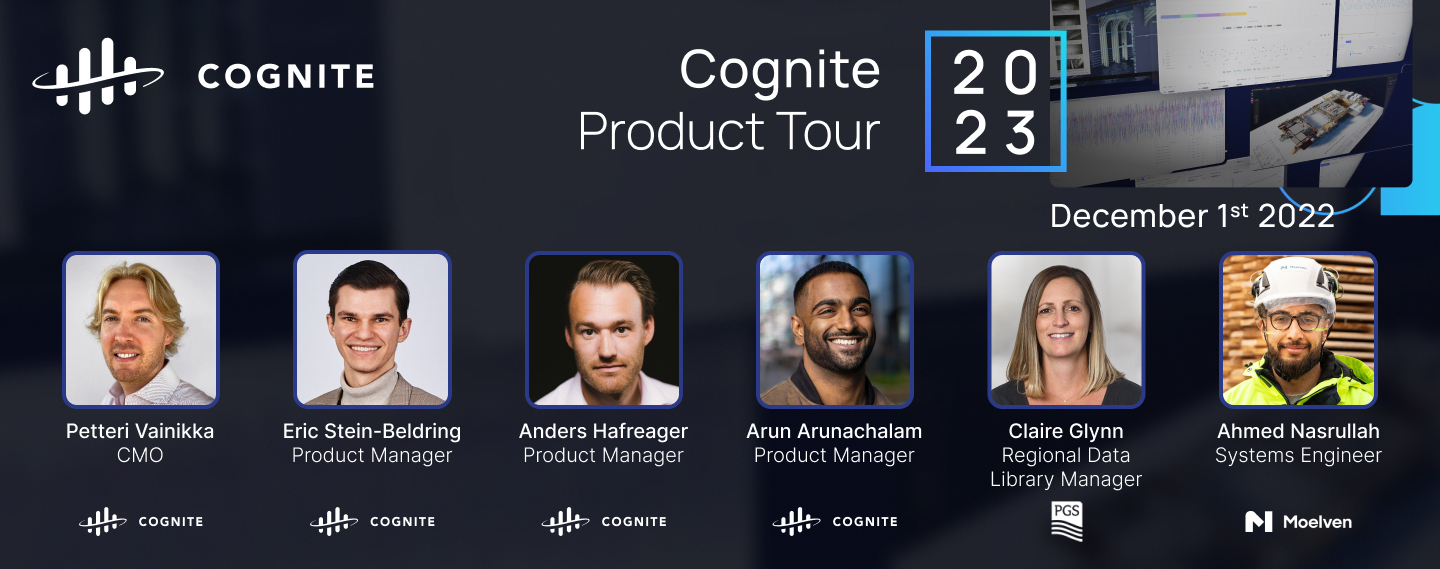
The Cognite Live Product Tour 2023 is just over a week away! This event is our annual showcase of Cognite Data Fusion functionalities – both those that will be released in our upcoming December 6th release, and looking ahead at what is to come throughout the new year. We’ll be driving a discussion with you – our community – about Industrial DataOps and the value of empowering Subject Matter Experts in the industrial organization. We hope you’re looking forward to the event as much as we are! Below is an outline of some of the exciting topics we’ll be discussing. WATCH THE COGNITE LIVE PRODUCT TOUR 2023 RECORDING INDUSTRIAL DATAOPS AND THE SUBJECT MATTER EXPERTIndustrial DataOps is about breaking down silos and optimizing the broad availability and usability of industrial data. Learn about why we are focusing on enabling the Subject Matter Expert throughout 2023 and the two main challenges that SMEs in every industrial sector face. COGNITE DATA FUSION: HIGHLIGHTS OF OUR DECEMBER 2022
If you are curious on how to get the most out of your Cognite Data Fusion subscription, you have come to the right place. This is part of a series of posts where we share some of our experience from working with customers in their journey towards an Industrial DataOps organization. We want to share lessons learned, mistakes made, good practices observed, and observations of pitfalls and risks. This is not the absolute truth, but hopefully a way to spark good discussions around an inherently complex topic!To quickly introduce ourselves, we are @Arjo Oosten, Digital Transformation Leader, winter sport addict and passionate about driving hands-on digital growth strategies and value based decision making, and @Karolina Luna, Solution Architect, cat lover, and passionate about the lifecycle perspective of everything (like solutions and data products). To learn more about Cognite Data Fusion, we recommend this post. Outsourcing FTW?As many companies have found, it can be hard to attract the
If you are curious on how to get the most out of your Cognite Data Fusion subscription, you have come to the right place. This is part of a series of posts where we share some of our experience from working with customers in their journey towards an Industrial DataOps organization. We want to share lessons learned, mistakes made, good practices observed, and observations of pitfalls and risks. This is not the absolute truth, but hopefully a way to spark good discussions around an inherently complex topic!To quickly introduce ourselves, we are @Arjo Oosten , Digital Transformation Leader, wintersport addict and passionate about driving hands-on digital growth strategies and value based decision making, and @Karolina Luna , Solution Architect, cat lover, and passionate about the lifecycle perspective of everything (like solutions and data products). To learn more about Cognite Data Fusion, we recommend this post. Knowing which roles you need for your Industrial DataOps organization, as c
If you are curious on how to get the most out of your Cognite Data Fusion subscription, you have come to the right place. This is part of a series of posts where we share some of our experience from working with customers in their journey towards an Industrial DataOps organization. We want to share lessons learned, mistakes made, good practices observed, and observations of pitfalls and risks. This is not the absolute truth, but hopefully a way to spark good discussions around an inherently complex topic!To quickly introduce ourselves, we are @Arjo Oosten, Digital Transformation Leader, winter sport addict and passionate about driving hands-on digital growth strategies and value based decision making, and @Karolina Luna, Solution Architect, cat lover, and passionate about the lifecycle perspective of everything (like solutions and data products). To learn more about Cognite Data Fusion, we recommend this post. Different types of cross-functionalIndustrial DataOps, like all other Ops mo
“Data has no value unless the business trusts and uses it” There is no shortage of data in any industrial company, but there is a general lack of understanding on how to extract it, bring it together, and use it in an actionable way.There are two discomforting truths within digital transformation across our key industries; energy, utilities, and manufacturing: Digitalization PoCs are commonplace. Real ROI isn’t. Billions are invested in cloud data warehouses and data lakes. Most data ends there, unused by anyone for anything. At the heart of this data-driven value dilemma lies a confluence of challenges, ranging from the technical (How can we best organize our diverse and fluid data universe?) to the operational (How can we create new information products and services?), to the financial (How can we treat data as an asset?), to the human (How can we improve data literacy and ensure digital solution adoption in the field?).With more and more of our industrial operations data readily
Schedule a personalized demo to learn how Cognite Data Fusion™ generates fast, scalable value from your data, enabling better decision making about maintenance, production and safety.In the demo, we will:Understand your priorities, initiatives and challenges that you are looking to solve Introduce Cognite and share examples of use cases we deliver for our customers today Identify areas where Cognite Data Fusion can help your organizationRequest demo with one of our product experts
If you are curious on how to get the most out of your Cognite Data Fusion subscription, you have come to the right place. This is part of a series of posts where we share some of our experience from working with customers in their journey towards an Industrial DataOps organization. We want to share lessons learned, mistakes made, good practices observed, and observations of pitfalls and risks. This is not the absolute truth, but hopefully a way to spark good discussions around an inherently complex topic!To quickly introduce ourselves, we are @Arjo Oosten, Digital Transformation Leader, winter sport addict and passionate about driving hands-on digital growth strategies and value based decision making, and @Karolina Luna, Solution Architect, cat lover, and passionate about the lifecycle perspective of everything (like solutions and data products). To learn more about Cognite Data Fusion, we recommend this post.Planning your solutions and Industrial DataOps with Cognite Data FusionTo be
INTRODUCTION A digital twin can be one of the most useful, insightful tools to drive industrial innovation. While the digital twin concept is no longer new, the capacity of the term continues to expand based on technological advancement, particularly in the realm of the Industrial Internet of Things (IIoT). Over time, digital twins have morphed to meet the practical needs of users. In oil and gas, for example, the possibilities of condition-based monitoring and predictive maintenance have amplified the need for a digital representation of both the past and present condition of an object or system. Gartner predicts that “by 2023, 33% of owner-operators of homogeneous composite assets will create their own digital twins, up from less than 5% in 2018” while “at least 50% of OEMs’ mass-produced industrial and commercial assets will directly integrate supplier product sensor data into their own composite digital twins, up from less than 10% today.” In the same report, Gartner indicates that
Hi All, I’m Stig Harald Gustavsen. For the past 15 years, I have been spending a third of my time on the Valhall oil platform. I work there as a metering technician/engineer. My daily tasks are production allocation, operating, calibrating, and maintaining the fiscal and analytical measurement systems.I’m incredibly passionate about Open Industrial Data (OID) and the concept of data sharing in general. I feel there is too little sharing of the data and information within heavy asset industrial sectors, mainly due to risk aversion. Humanity as a collective needs solutions on the industrial scale. When we withhold information, we hinder creativity and miss out on opportunities that we could leverage to create a better future together. A great example is how the internet has democratized information sharing in the commercial IT world. The more heavy asset-oriented industrial world has yet to go through this reformation. Still, I hope and wholeheartedly believe the OID is the start of this
Below we have outlined several frequently asked questions and their corresponding answers.Don’t see the answer to your question? Post as a reply in this thread and we’ll be sure to answer and/or add it to the FAQ list below!Protip: Use [cmd+f] or [cntrl+f] to search for keywords related to your question. FAQs How do i use monitoring in CDF and access the documentation?You can access the documentation for the new monitoring solution in CDF here: https://docs.cognite.com/cdf/charts/#monitoring.
Hello Cognite Community! Izabela Hawrylko here, Cognite’s Partner Development Director working with our Application and Industry partners. In my day-to-day work, I’m joining forces with other digital disruptors to build “Partner+Cognite” technical and go-to-market strategies for end-to-end industry solutions solving most pressing industrial challenges.I can imagine you might be wondering who Open Industrial Data (OID) is for. Anyone who is an industrial data enthusiast. Curious mind interested in better understanding the industrial reality. Are you an Independent Software Vendor building solution and applications for heavy-asset industries? Market Incumbent looking for data to experiment and drive innovation for your products and services? Researcher? Student? We have created this project for you to explore real-life industrial data streams and experiment with analytics, building new algorithms and creating visualizations.Join hundreds of other industrial data enthusiasts and dive into
Introduction In this post we continue to share some of our internal material aimed towards solution builders, such as data scientists, who want to develop their ability to develop high quality solutions by creating more reliable, maintainable and readable code. This is the second part of 2.MotivationHigh code quality is easy to recognize but can be very hard to describe concretely. The assumed benefits are easier maintainability, modifiability, and more. While code style, like formatting, can be a matter of different taste, most parties agree that other code practices that fall under the umbrella term “anti-patterns” should be avoided. To stop endless formatting discussions and the like, having (and adhering to the industry) standard makes reading and understanding code across repositories easier.What this guide is notThis guide will not tackle the topic of “how to set up a Python project” the right way . Please let us know in the comments if you would like us to share more of our ex
Only a fool believes in different outcomes by doing the same as before.Executive summary: The modern data stack - a more nuanced view of data platforms - is quickly gaining ground, focusing on making data truly useful, not just storing it in the cloud Modern data stack based platforms (simply referred to as 'platforms' from hereon) are the only means of moving beyond costly, monolithic, closed business applications that maintain business and data silos, preventing real digital transformation Platforms themselves are equally no longer monolithic products, but equally composed of interoperable platforms services from multiple open platforms Open platforms with composable business applications are the new technology imperative. Old technology stacks, and “lets only focus on the discrete business solution at hand” approaches don’t work for the 2020s enterprise OT, IT, and business must work together to prevent tug of wars - and instead - collaborate to secure competitiveness in the
Introduction In this post we share some of our internal material aimed towards solution builders, such as data scientists, who want to develop their ability to develop high quality solutions by creating more reliable, maintainable and readable code. This is the first part of 2.MotivationHigh code quality is easy to recognize but can be very hard to describe concretely. The assumed benefits are easier maintainability, modifiability, and more. While code style, like formatting, can be a matter of different taste, most parties agree that other code practices that fall under the umbrella term “anti-patterns” should be avoided. To stop endless formatting discussions and the like, having (and adhering to the industry) standard makes reading and understanding code across repositories easier.What this guide is notThis guide will not tackle the topic of “how to set up a Python project” the right way . Please let us know in the comments if you would like us to share more of our experience in t
I tried logging in with these commands: platypus login --cluster greenfield --tenant "schema-test"which didn’t work as I thought the tenant was a CDF tenant and not an Azure AD tenant. Then I tried:platypus login --cluster greenfield --tenant "c08c2afd-4823-482b-9113-ed2746fe6026"Which gave me a “Login successful” webpage, but the CLI said: “failed to authenticate against CDF project: platypus”. Then Soumesh pointed out that platypus is the default project, and I needed to type: platypus login --cluster greenfield --tenant "c08c2afd-4823-482b-9113-ed2746fe6026" schema-testWhich worked I think having default values made it harder to use as the CLI didn’t guide me on missing project name / CDF cluster etc, and maybe a better name than tenant as it can be interpreted as CDF tenant/project.
Herein lies the challenge, while many manufacturers have successfully fostered lighthouse sites, very few have been able to replicate this success across their other production sites.To define a lighthouse site, these are the ones that are first to install the newest technologies, often have teams with unique technological expertise, and are likely the most productive and agile of all your production sites. This lighthouse concept is best recognized by the World Economic Forum, which started the Global Lighthouse Network in 2018 and currently recognizes 90 manufacturing sites worldwide for “applying Fourth Industrial Revolution technologies to increase efficiency and productivity, along with environmental stewardship.” The purpose of these lighthouse sites are to act as the guiding model for other production sites, providing a wave of innovation to address use cases that will increase productivity, improve quality, reduce energy and water consumption, and much more. The problem is that
Design Performance Architecture Backups Access control Roadmap Design Time series databases typically come in two flavors: write-optimized and read-optimized. Cognite Data Fusion Time Series Database (CDF TSDB) strikes a balance between the two, ensuring that tens of millions of data points per second can be ingested and read in response to queries simultaneously, reliably, and with ultra-low latency both for input/indexing and querying.Write-optimized time series databases are useful as historians, constantly ingesting data from industrial equipment. But they are of limited use for large-scale analytics and are a poor choice to power interactive applications, as the stress from unevenly distributed user traffic may interfere with the reliable operation of time series ingestion. Examples include most industrial historians, as well as InfluxDB.Read-optimized time series databases on the other hand are an excellent choice for analytical query loads, but struggle with streaming ingestion.
Hi there,Thanks for being a member of Cognite Hub! Since our launch in May, we've grown to more than 700 members. Together, we've built a space where we can grow and build.Got any ideas? Share them with the community! Don't be shy — no question is too big or too small. No matter your experience or role, your thoughts are welcome.Thank you so much for all your engagement so far. We're excited to keep building better products, sharpening our competitive edge, and doing something great for the world.In the meantime, we've created a virtual holiday greeting for you below!Holiday Greetings from Anita & the Community Team
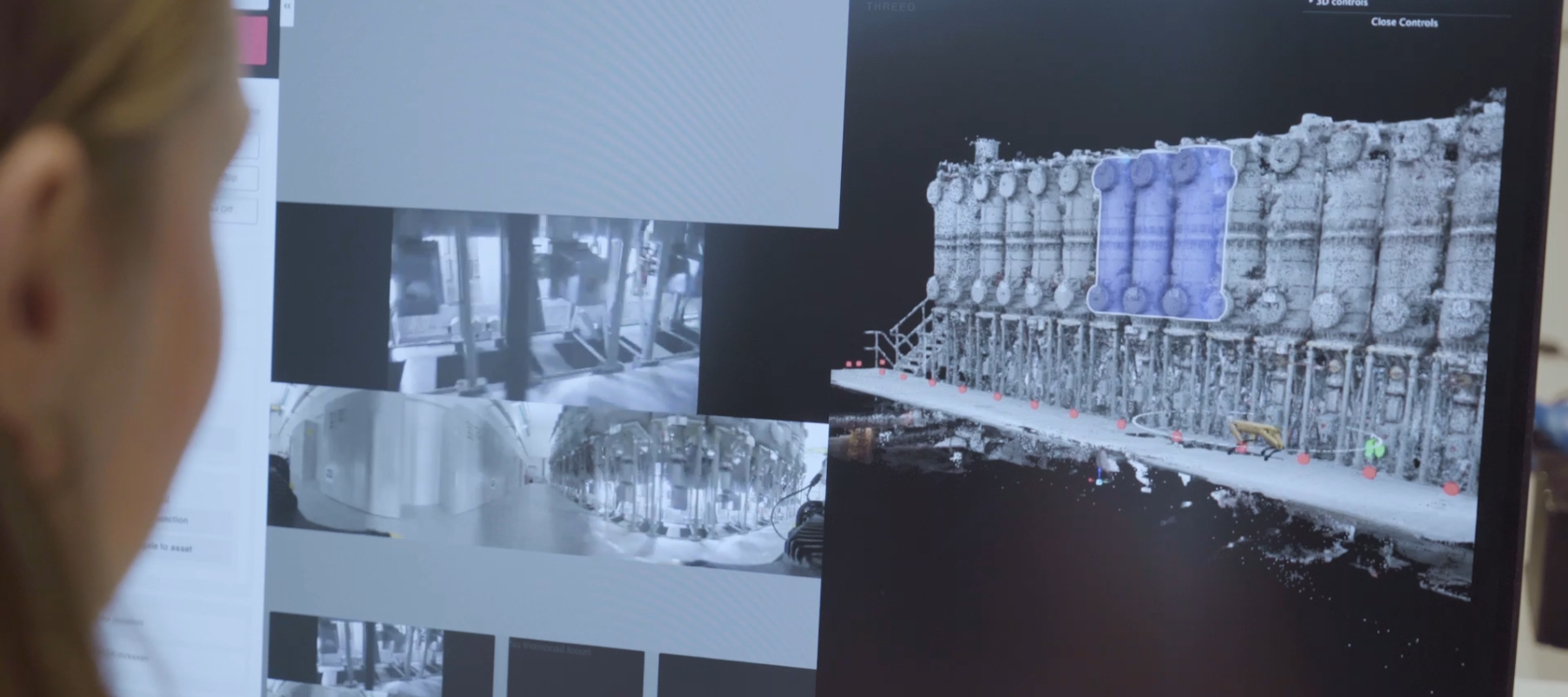
Many tasks in industry are perfect for robots. They are repetitive, located in hazardous or remote environments, and require a great deal of manual data collection. This is a great pain for thousands of industrial companies across the globe, hence also a good opportunity for Cognite. We are in a unique position where we facilitate digital twins for our customers. Hence, we can add context to the data captured by robots - which in turn will enrich the operational digital twins. In this read from Hart Energy you can read more about Solving the Robot Data Problem with Industrial DataOps by Francois Laborie, Cognite President of North America, Cognite Data Fusion (CDF) gives industrial companies a powerful data foundation for automation. With access to sensor data, asset hierarchies, and spatial information in one place, robotics systems — from drones to wheeled and four-legged robots — can connect to digital twins and collect data automatically through their APIs. CDF makes this integra
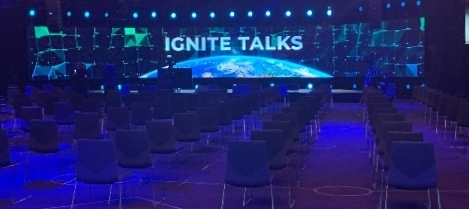
In one of the first in-person industry events since COVID-19, international leaders from across asset-heavy industries took to the stage in Oslo, Norway, on Sept. 21, to present how they are working toward net zero or net negative and the investments they’re making in technology, ESG solutions, and workforce transformation. Set to a backdrop of industrial images juxtaposed with glimpses of majestic nature, the industrial technology and digitalization conference provided a blunt reminder of the world that these net-zero pledges are trying to protect. [Editor’s note: All of these sessions, plus dozens of other Ignite Talks, are available on-demand now.] First on stage was Aker CEO and Cognite Chair Øvyind Eriksen, who opened with a rallying cry:“You’ve made the [net-zero] pledge, but there are only 10,000 days to go,” Eriksen said. “It’s time to discuss the hard issues about what it will take. He added that addressing the challenges “head-on” is what Ignite is all about. In its fourth
The digital twin is the foundation for industrial digitalization efforts, delivering real-time insights, accurate forecasting, and intelligent decision-making. In the almost two decades since the term was invented, industry - and the world - have changed dramatically. So what’s next for digital twin technology? Johan Krebber, IT Strategist at Cognite, summarized his perspective on the evolution of the digital twin concept during a panel at Ignite Talks, 2021’s big industrial digitalization conference. Read below an extended expert interview between Johan and Petteri Vainikka, our Vice President of Product Marketing, on the future of digital twins.Hello, Johan! Thank you, for taking part in our panel at Ignite Talks and especially for taking the time to do a deep-dive interview to expand on your contributions to the panel! Let’s start with a lightning round question. All I need is a simple yes or no. You’ll get to elaborate in a second. Should we sunset talking about digital twins and
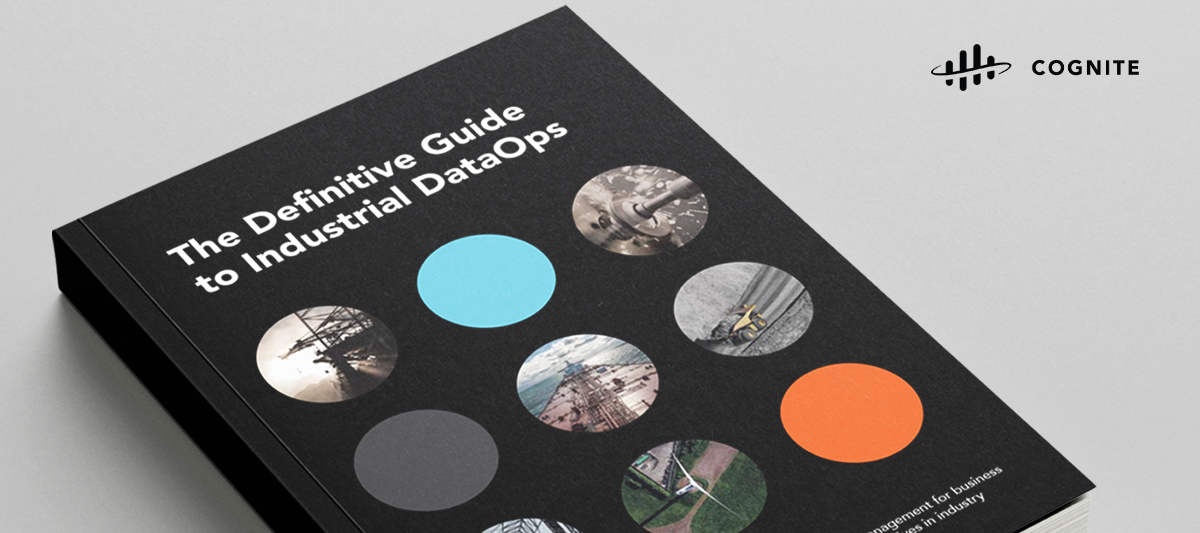
Did you know that only one in four industrial organizations extract value from their data? The lack of tools and processes to connect, contextualize, and govern the data often stand in the way of industrial digitalization. Industrial DataOps is a powerful new way of deploying data and technology to transform an industrial organization. It makes sense of, manages, and extracts value from complex industrial data. And it is is already becoming a driving force in industrial transformations, helping accelerate digital maturity, enabling data teams to deliver more digital products, and realizing more operational value at scale. In a 2020 survey of global companies, McKinsey found organizations that embedded DataOps could see the volume of new features increase by 50 percent because data automation enables quicker development iterations. At Cognite, we’ve released the first-of-its-kind Industrial DataOps book - a guide packed with insights, industry expertise and practical advice on how you
We’re excited to host our fourth global conference, Ignite Talks on September 21-23. We’d like to invite you to this virtual hybrid event, which will bring together global leaders and innovators from technology, industry, and government who are dedicated to meet the carbon net-zero 2050 deadline and create a more innovative, data-driven, sustainable future. You can view every session live or on your own time. The three-day industrial digitalization conference, co-located in Asia, Europe, the Middle East, and the United States, will focus on the innovative technologies that power industries like oil and gas, power and utilities, and manufacturing and enable renewable energy development. You can expect conversations on Industrial DataOps and forward thinking technologies like robotics, artificial intelligence, and data analytics, as well as deep discussion on how to drive profitable sustainability.“As the energy industry reinvents itself and deploys new technologies, we know that data w
There are two discomforting truths within digital transformation across our key industries; energy, utilities, and manufacturing.Digitalization PoCs are commonplace. Real ROI isn’t. Billions are invested in cloud data warehouses and data lakes. Most data ends there, unused by anyone for anything.At the heart of this data-driven value dilemma lies a confluence of challenges, ranging from the technical (How can we best organize our diverse and fluid data universe?) to the operational (How can we create new information products and services?), to the financial (How can we treat data as an asset?), to the human (How can we improve data literacy and ensure digital solution adoption in the field?).Read also: DataOps: A transformative new approach to data ROITo avoid boiling the ocean, we will focus on what is perhaps the most fundamental question all fellow Chief Data Officers and other digitalisation executives need to consider as their Northstar — and in doing so, we will find ourselves on
Already have an account? Login
No account yet? Create an account
Enter your E-mail address. We'll send you an e-mail with instructions to reset your password.


 Check the
documentation
Check the
documentation Ask the
Community
Ask the
Community Take a look
at
Academy
Take a look
at
Academy Cognite
Status
Page
Cognite
Status
Page Contact
Cognite Support
Contact
Cognite Support