Join the discussions about products powered by Cognite Data Fusion. Click the + CREATE TOPIC button in the menu bar to start the conversation.
Recently active
Herein lies the challenge, while many manufacturers have successfully fostered lighthouse sites, very few have been able to replicate this success across their other production sites.To define a lighthouse site, these are the ones that are first to install the newest technologies, often have teams with unique technological expertise, and are likely the most productive and agile of all your production sites. This lighthouse concept is best recognized by the World Economic Forum, which started the Global Lighthouse Network in 2018 and currently recognizes 90 manufacturing sites worldwide for “applying Fourth Industrial Revolution technologies to increase efficiency and productivity, along with environmental stewardship.” The purpose of these lighthouse sites are to act as the guiding model for other production sites, providing a wave of innovation to address use cases that will increase productivity, improve quality, reduce energy and water consumption, and much more. The problem is that
Design Performance Architecture Backups Access control Roadmap Design Time series databases typically come in two flavors: write-optimized and read-optimized. Cognite Data Fusion Time Series Database (CDF TSDB) strikes a balance between the two, ensuring that tens of millions of data points per second can be ingested and read in response to queries simultaneously, reliably, and with ultra-low latency both for input/indexing and querying.Write-optimized time series databases are useful as historians, constantly ingesting data from industrial equipment. But they are of limited use for large-scale analytics and are a poor choice to power interactive applications, as the stress from unevenly distributed user traffic may interfere with the reliable operation of time series ingestion. Examples include most industrial historians, as well as InfluxDB.Read-optimized time series databases on the other hand are an excellent choice for analytical query loads, but struggle with streaming ingestion.
Hi there,Thanks for being a member of Cognite Hub! Since our launch in May, we've grown to more than 700 members. Together, we've built a space where we can grow and build.Got any ideas? Share them with the community! Don't be shy — no question is too big or too small. No matter your experience or role, your thoughts are welcome.Thank you so much for all your engagement so far. We're excited to keep building better products, sharpening our competitive edge, and doing something great for the world.In the meantime, we've created a virtual holiday greeting for you below!Holiday Greetings from Anita & the Community Team
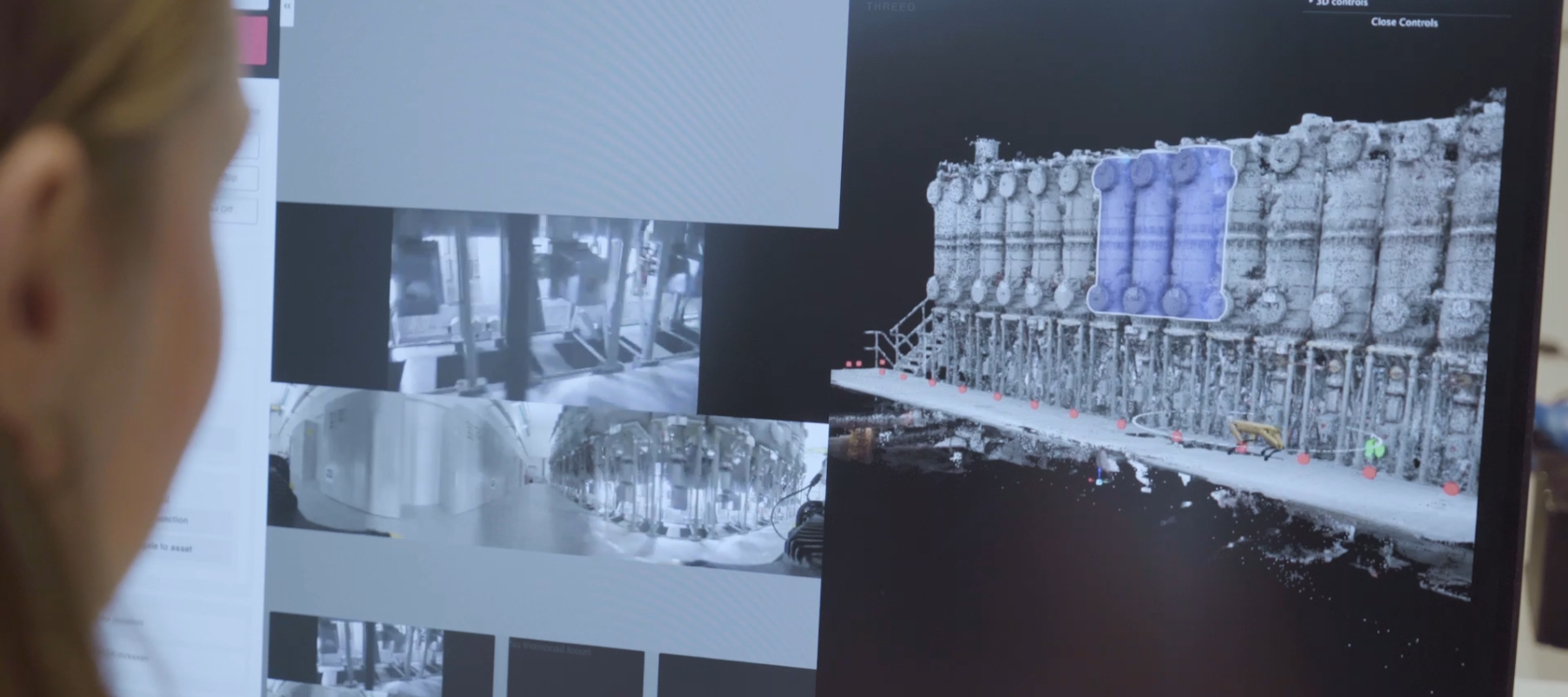
Many tasks in industry are perfect for robots. They are repetitive, located in hazardous or remote environments, and require a great deal of manual data collection. This is a great pain for thousands of industrial companies across the globe, hence also a good opportunity for Cognite. We are in a unique position where we facilitate digital twins for our customers. Hence, we can add context to the data captured by robots - which in turn will enrich the operational digital twins. In this read from Hart Energy you can read more about Solving the Robot Data Problem with Industrial DataOps by Francois Laborie, Cognite President of North America, Cognite Data Fusion (CDF) gives industrial companies a powerful data foundation for automation. With access to sensor data, asset hierarchies, and spatial information in one place, robotics systems — from drones to wheeled and four-legged robots — can connect to digital twins and collect data automatically through their APIs. CDF makes this integra
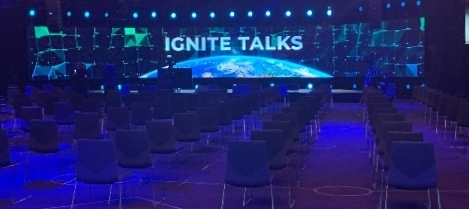
In one of the first in-person industry events since COVID-19, international leaders from across asset-heavy industries took to the stage in Oslo, Norway, on Sept. 21, to present how they are working toward net zero or net negative and the investments they’re making in technology, ESG solutions, and workforce transformation. Set to a backdrop of industrial images juxtaposed with glimpses of majestic nature, the industrial technology and digitalization conference provided a blunt reminder of the world that these net-zero pledges are trying to protect. [Editor’s note: All of these sessions, plus dozens of other Ignite Talks, are available on-demand now.] First on stage was Aker CEO and Cognite Chair Øvyind Eriksen, who opened with a rallying cry:“You’ve made the [net-zero] pledge, but there are only 10,000 days to go,” Eriksen said. “It’s time to discuss the hard issues about what it will take. He added that addressing the challenges “head-on” is what Ignite is all about. In its fourth
The digital twin is the foundation for industrial digitalization efforts, delivering real-time insights, accurate forecasting, and intelligent decision-making. In the almost two decades since the term was invented, industry - and the world - have changed dramatically. So what’s next for digital twin technology? Johan Krebber, IT Strategist at Cognite, summarized his perspective on the evolution of the digital twin concept during a panel at Ignite Talks, 2021’s big industrial digitalization conference. Read below an extended expert interview between Johan and Petteri Vainikka, our Vice President of Product Marketing, on the future of digital twins.Hello, Johan! Thank you, for taking part in our panel at Ignite Talks and especially for taking the time to do a deep-dive interview to expand on your contributions to the panel! Let’s start with a lightning round question. All I need is a simple yes or no. You’ll get to elaborate in a second. Should we sunset talking about digital twins and
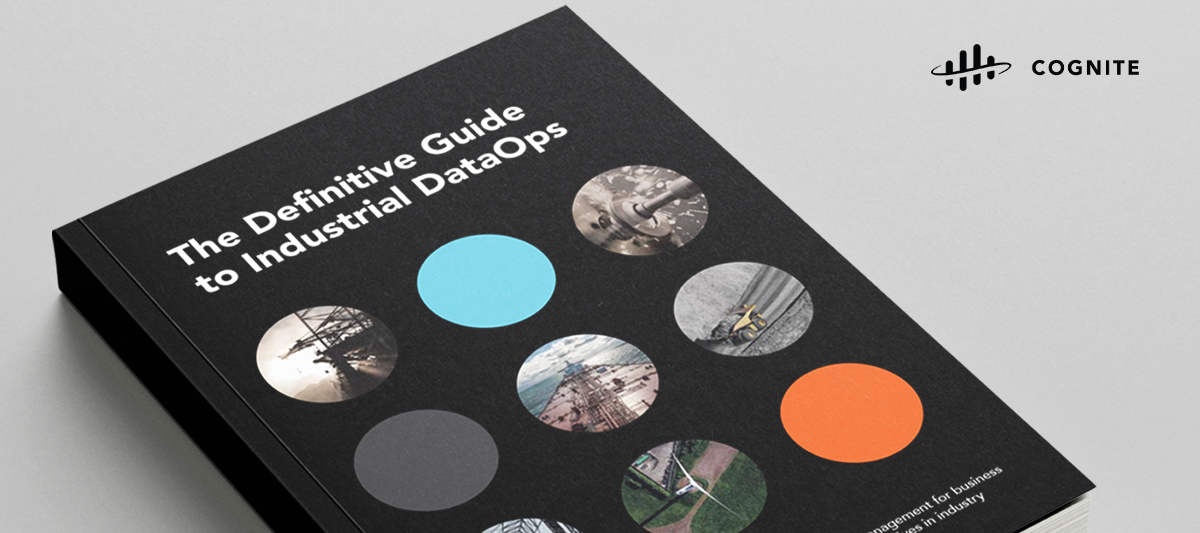
Did you know that only one in four industrial organizations extract value from their data? The lack of tools and processes to connect, contextualize, and govern the data often stand in the way of industrial digitalization. Industrial DataOps is a powerful new way of deploying data and technology to transform an industrial organization. It makes sense of, manages, and extracts value from complex industrial data. And it is is already becoming a driving force in industrial transformations, helping accelerate digital maturity, enabling data teams to deliver more digital products, and realizing more operational value at scale. In a 2020 survey of global companies, McKinsey found organizations that embedded DataOps could see the volume of new features increase by 50 percent because data automation enables quicker development iterations. At Cognite, we’ve released the first-of-its-kind Industrial DataOps book - a guide packed with insights, industry expertise and practical advice on how you
We’re excited to host our fourth global conference, Ignite Talks on September 21-23. We’d like to invite you to this virtual hybrid event, which will bring together global leaders and innovators from technology, industry, and government who are dedicated to meet the carbon net-zero 2050 deadline and create a more innovative, data-driven, sustainable future. You can view every session live or on your own time. The three-day industrial digitalization conference, co-located in Asia, Europe, the Middle East, and the United States, will focus on the innovative technologies that power industries like oil and gas, power and utilities, and manufacturing and enable renewable energy development. You can expect conversations on Industrial DataOps and forward thinking technologies like robotics, artificial intelligence, and data analytics, as well as deep discussion on how to drive profitable sustainability.“As the energy industry reinvents itself and deploys new technologies, we know that data w
There are two discomforting truths within digital transformation across our key industries; energy, utilities, and manufacturing.Digitalization PoCs are commonplace. Real ROI isn’t. Billions are invested in cloud data warehouses and data lakes. Most data ends there, unused by anyone for anything.At the heart of this data-driven value dilemma lies a confluence of challenges, ranging from the technical (How can we best organize our diverse and fluid data universe?) to the operational (How can we create new information products and services?), to the financial (How can we treat data as an asset?), to the human (How can we improve data literacy and ensure digital solution adoption in the field?).Read also: DataOps: A transformative new approach to data ROITo avoid boiling the ocean, we will focus on what is perhaps the most fundamental question all fellow Chief Data Officers and other digitalisation executives need to consider as their Northstar — and in doing so, we will find ourselves on
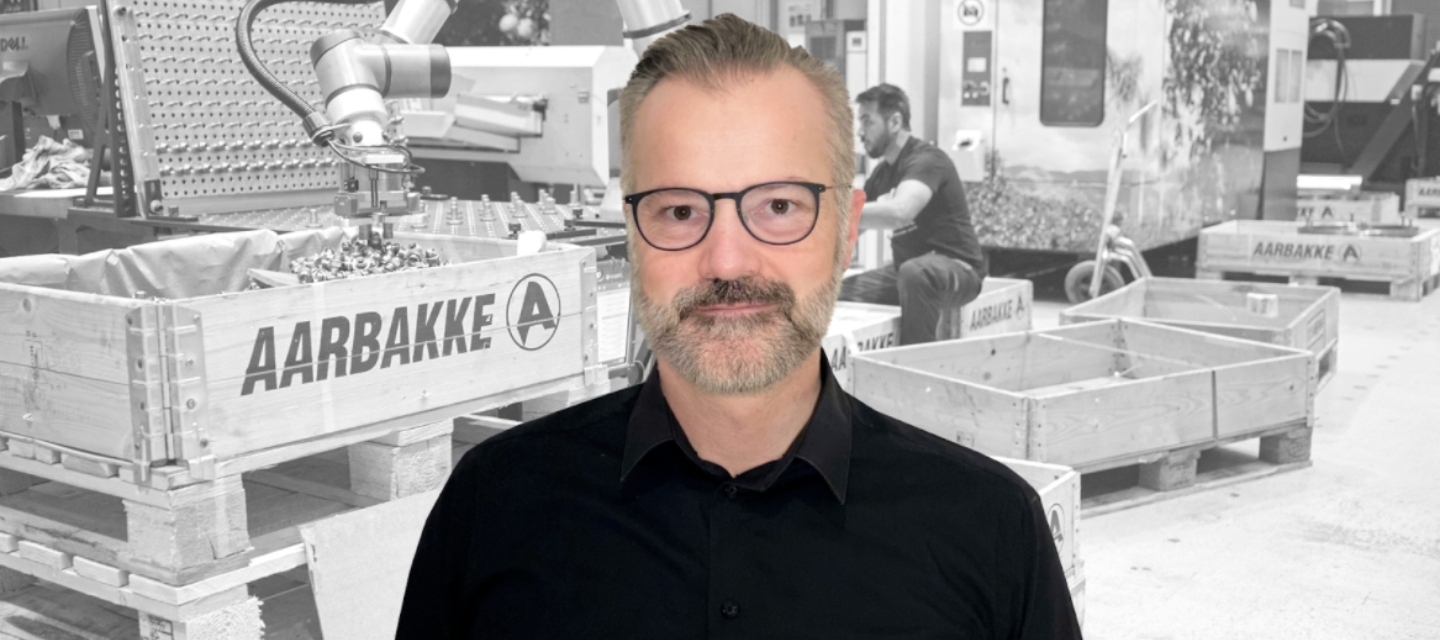
Most people are talking about DataOps as if it’s an idea that emerged in the last 5 to 10 years. But according to Rolf Thu, it’s something Aarbakke, a world-leading mechanical solutions supplier to the oil and gas industry, has been thinking about since the early 2000s. Thu says what’s today known as DataOps has been long in the making — people just didn’t know what to call it. For Aarbakke, it’s been a steady evolution, introducing digital solutions step by step over the years until the company emerged as the “smart factory” it sees itself as today.“I joined Aarbakke in 1989, and the theme throughout my career has been learning,” Thu said. “And what we’re doing now with data is also about learning. We are learning from best practices, we are increasing the competence of our employees, and we are constantly seeking improvements for our factory through better and smarter uses of data.”Can you explain more about how you use the data to achieve more at Aarbakke?RT: With the powerful data
Cognite's Industrial Digital Academy (IDA), available on Cognite Academy, offers several courses to help you upskill and close any knowledge gaps to understand the value of CDF better.Today, we are eager to present the Data Science Fundamentals learning path we created with Cognite's data scientists. Some of our customers already had a pre-run, and their feedback is making us proud, so we recommend that you try it out. Take this opportunity and learn about data science from an industry point of view. You will be guided through a set of courses showcasing how data scientists solve industry challenges using industrial data.By the end of this learning path, you will: Understand basic principles of data science from an industry point of view Realize the importance of data science workflow Understand the value of understanding the business problem Be able to compare and analyze various data science use-cases Understand the evolvement of data science, data doers, and citizen data sc
Anatomy of a contextualization engine for AI use case scaling in industry If there is one thing we at Cognite get a lot of questions on, it’s contextualization. Not so much what is contextualization (luckily we are getting past that phase now), but specifically on two subsequent topics:How does your contextualization engine actually work? How does contextualization make use case scaling order of magnitude (or two!) more efficient?In this article, we will address both the above questions. We will also offer an ‘executive summary’ on data contextualization and its role in modern data management towards the end for completeness. Let’s dive in!Read also: The data liberation paradox: drowning in data, starving for context How does Cognite Data Fusion contextualization engine work?First, it is paramount to set some foundations:There is no such thing as the ideal universal data model. Having some pre-defined reference data model (can be based on industry-standard where applicable, or only usi
John Markus Lervik in Cognite has been contacted by over 100 VC investors, but he had long warmed up one of the very, very hottest. This article was originally published in Norwegian in Shifter. Read the article here. It is early morning Silicon Valley, and late afternoon at Fornebu. One of the real seniors in the investor community "over there" has got up at six o'clock to attend a video conference he does not want to miss.TCV top Jake Reynolds has previously led investments in Splunk, Webroot and ExactTarget, the latter now known by a new name; Salesforce Marketing Cloud - but this time he has "traded" Norwegian. On the direct line to the Aker quarter, he can finally tell about something he has wanted to do for a long time - invest in Cognite from Norway.- It is incredibly cool that we have got the world's most competent technology investor as a partner, says founder and CEO John Markus Lervik about the big event earlier this week - when it became known that Norwegian Cognite will r
Cognite announced it has raised $150 million in an equity funding round led by TCV at a $1.6 billion post-money valuation. Cognite says this investment marks one of the largest funding rounds for a SaaS company in Europe and will be used to expand its platform and support hiring efforts. Read the full article here.
If there is one technology trend aside “AI” that is set to define the 2020s, it is “Ops”. From DevOps to DataOps to MLOps, focus is rightfully put on end-to-end operationalization rather than initial code, data or algorithm development alone. Why does your organization need DataOps?According to Gartner, “DataOps is a collaborative data management practice focused on improving the communication, integration and automation of data flows between data managers and data consumers across an organization”. Forrester defines DataOps as “the ability to enable solutions, develop data products, and activate data for business value across all technology tiers from infrastructure to experience”. Ultimately, DataOps aims for predictable data delivery and change management, using technology to automate, orchestrate, and operationalize data use and value dynamically. With DataOps, you reduce specialized roles in your data-to-value workflows and enable higher data consumer autonomy and empowerment, th
When John Markus Lervik co-founded the industrial artificial intelligence company Cognite with Norwegian conglomerate Aker ASA in 2016, the companies set out to solve what they believed was an industrial data problem. Now the Cognite chief executive believes AI is thesolution to the larger issues of industrial transformation and a profitable energy transition. As Lervik told an online audience at the CeraWeek by IHS Markit conference in March: “Digital can make sustainability profitable by enabling cost cuts, improving efficiency and reducing environmental footprint — all at the same time — and in most cases, it comes hand-in-hand.” The energy industry is on the precipice of great change. The digital transformation that was under way is experiencing a Covid-19-induced acceleration and a growing push to transition towards sustainable fuel sources like wind, solar, and hydrogen. As a technology entrepreneur, Lervik naturally sees digital as the answer to the many intersecting challenges
Cognite was featured in TechCrunch as Oslo VC's discuss 2021 trends. The article talks about the incredible opportunity in the Nordic region, with Cognite cited as a strong company to watch. Excerpt from the article:Which industries in your city and region seem well-positioned to thrive, or not, long term? What are companies you are excited about (your portfolio or not), and which founders?We see a good variety of exciting companies from Oslo and Norway. Kahoot, Spacemaker, Cognite, and Pexip have been leading the way lately, with new ones like Memory, Tibber, PortalOne, reMarkable, and many others following right behind. We also believe that Norway’s strong roots with industrial companies now seem to move into tech, for example with a highly skilled workforce moving over from the oil and gas industry, as well as really exciting companies coming out of this area — Cognite being a strong example.Read the full article here.
Shifter has spoken with the two managers who form the backbone of Aker's new software department. They say that acquiring startups is high up on the agenda. Kjell Inge Røkke recently announced a large-scale investment in software. He outlined a future with dozens of software companies under a separate Aker division called Axis. He told E24 that he has worked on this plan for five years. That is about as long as John Markus Lervik has been in the Aker Group and developed Cognite. The company, which collects and analyzes industry data, was recently valued at NOK 5 billion by Silicon Valley investor Accel. Lervik has also been instrumental in the establishment of Axis.“A lot has been created along the way, but this has existed as a conceptual idea since before the start in 2016,” Lervik said about the new initiative.“The idea behind Axis is to see how people in Norway can build new startups, which can help solve some of the thousands of challenges and opportunities that the industry f
When we founded Cognite four years ago, one of the success criteria we envisioned was that a developer should be able to write a useful industrial application within one hour of being onboarded to Cognite Data Fusion. Coming from the consumer software industry, we did not quite realize how ambitious that was until later. Just think of what it was like to write a mobile phone application 15 years ago. There was no iOS or Android. If you were lucky, you would be writing custom J2ME code for each handset. And there were thousands of different ones, all doing things differently. Fast forward to today, and it is possible for a committed developer to write and distribute a mobile application that runs on most smartphones in the world in a weekend. The industrial world has a similar fragmentation issue that Android and iOS addressed a decade ago. Hundreds of different OT (Operational Technology) systems are present even within a single mid-sized industrial company. They do things slightly dif
Picture this scenario:A building materials company has just produced a fresh batch of cement. To test the quality of the cement, the company then produces a concrete element. Weeks later, once the concrete has hardened, the quality control turns up an issue. The cement wasn’t up to standard.Why wasn’t the issue detected earlier? In this scenario, there wasn’t a live sensor that could predict the quality of the finished product early on in the production process. But even in the cases where sensors do exist, they sometimes stop working — or are never installed in the first place. The manufacturing industry has a sensor problem. To fix it, we need to look at how other heavy-asset industries use machine learning and root cause analysis to produce data-driven predictions that manufacturers can act on with confidence to optimize production and reduce waste.Read more.
A digital twin can be one of the most useful, insightful tools to drive industrial innovation. While the digital twin concept is no longer new, the capacity of the term continues to expand based on technological advancement, particularly in the realm of industrial IoT. Over time, digital twins have morphed to meet the practical needs of users. In Oil & Gas, for example, the possibilities of condition-based monitoring and predictive maintenance have amplified the need for a digital representation of both the past and present condition of an object or system. Gartner predicts that “by 2023, 33% of owner operators of homogeneous composite assets will create their own digital twins, up from less than 5% in 2018” while “at least 50% of OEMs’ mass-produced industrial and commercial assets will directly integrate supplier product sensor data into their own composite digital twins, up from less than 10% today.”1 In the same report, Gartner indicates that digitalization will motivate ind
Manufacturing companies face an uncertain business environment filled with trade conflicts, fluctuating raw material costs, and evolving consumer demands. This uncertainty is driving business leaders to look inward, where investments in information and operational technologies could bolster their bottom lines. Intelligent, interconnected, and automated factories allow manufacturers to scale and adapt capabilities as they seize new opportunities and respond to changing demands. In this way, new digital technologies deliver tangible solutions for manufacturers facing unpredictable market realities.We took a closer look at the top digitalization trends changing the manufacturing industry. We discovered not only how these technologies transform manufacturing, but how they fit into a workforce management model that future-proofs manufacturing environments and drives long-term business value as well.Read the full trend report here.
Anatomy of a contextualization engine for AI use case scaling in industryIf there is one thing we at Cognite get a lot of questions about, it’s contextualization. Not so much what is contextualization, but specifically on two subsequent topics:How does your contextualization engine actually work? How does contextualization make use case scaling order of magnitude (or two!) more efficient?In this article, we will address both the above questions. We will also offer an executive summary on data contextualization and its role in modern data management towards the end for completeness. Let’s dive in!Read the article here.
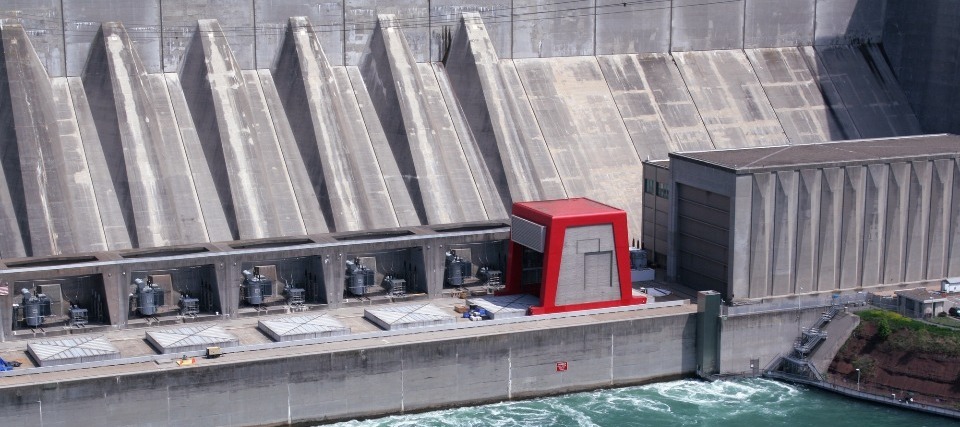
Controlled water flow is the obvious center of all hydropower operations. This is where stored, potential energy transforms into valuable, sustainable power — a source which accounts for more than 1300 GW of electricity produced worldwide.Hydropower operations have been evolving through technology, process, and approach in order to control, optimize, and take advantage of this water flow. With the same end objective in mind — improved operational efficiency and adaptability to compounding energy industry pressures — operators can take a similar approach to data flow and transformation.Read more.
In 2020, resiliency has taken on expanded meaning as utility companies worldwide adopt new, evolving strategies for new, evolving norms.Defined as “the capacity to recover quickly from difficulties; toughness,” resilience is usually thought of in relation to the operator’s ability to bounce back from severe weather events and unexpected grid outages. Today, this operational pillar remains as important as it ever was. In August 2020, Tropical Storm Isaias battered the East Coast and caused more than two million power outages. That same month, Hurricane Laura, a Category 4 storm, pounded the Gulf Coast for hours, leaving hundreds of thousands of people without power in Louisiana and Texas. Meanwhile, on the West Coast, California faced new, unexpected blackouts due to an intense heatwave, an overloaded grid and offline generation. Not only are these examples indicative of the pressures to come; they highlight the fact that operational resilience is a moving target, making it difficult to


 Check the
documentation
Check the
documentation Ask the
Community
Ask the
Community Take a look
at
Academy
Take a look
at
Academy Cognite
Status
Page
Cognite
Status
Page Contact
Cognite Support
Contact
Cognite Support