I observe a difference in behavior that I cannot explain.
My input data, few datapoints, and before the value is 0, timeseries.is_step = True
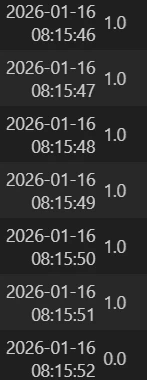
Input datapoints
With client.time_series.data.retrieve, behavior is as expected :
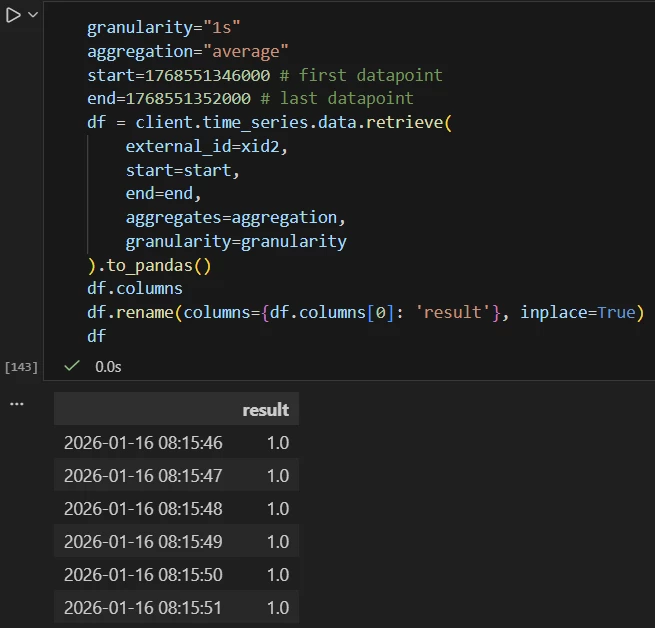
And with every granularity results are okay as expected.
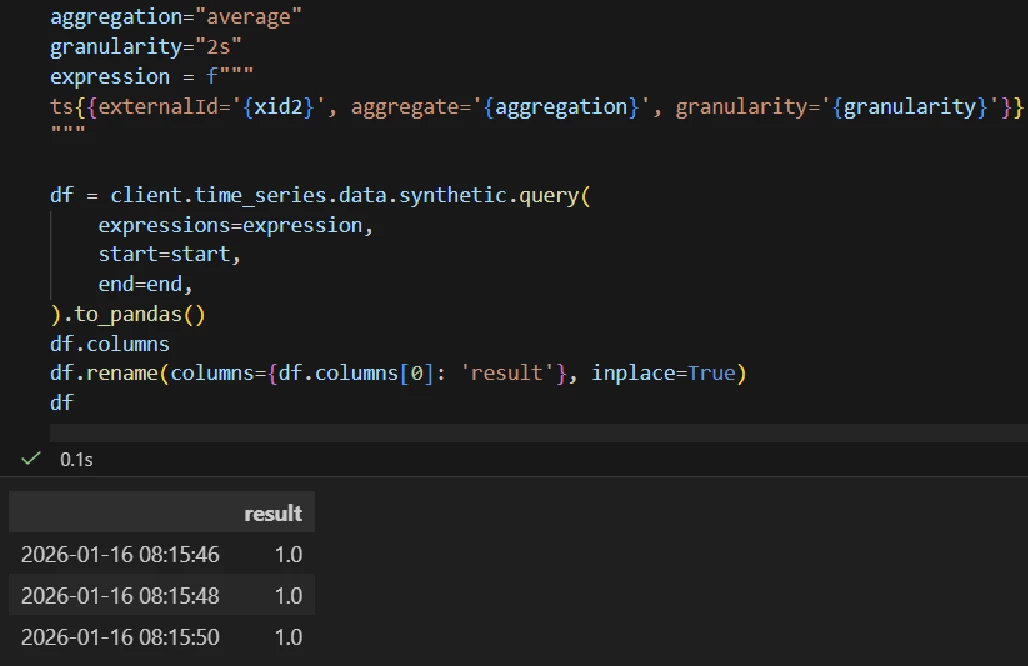
Nevertheless, with client.time_series.data.synthetic.query it’s… different.
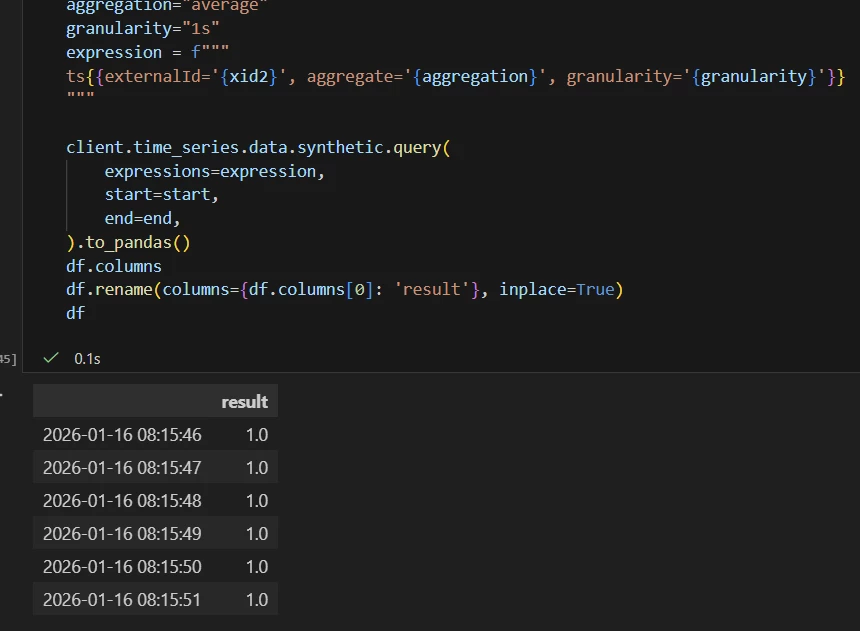
that’s okthat’s ok
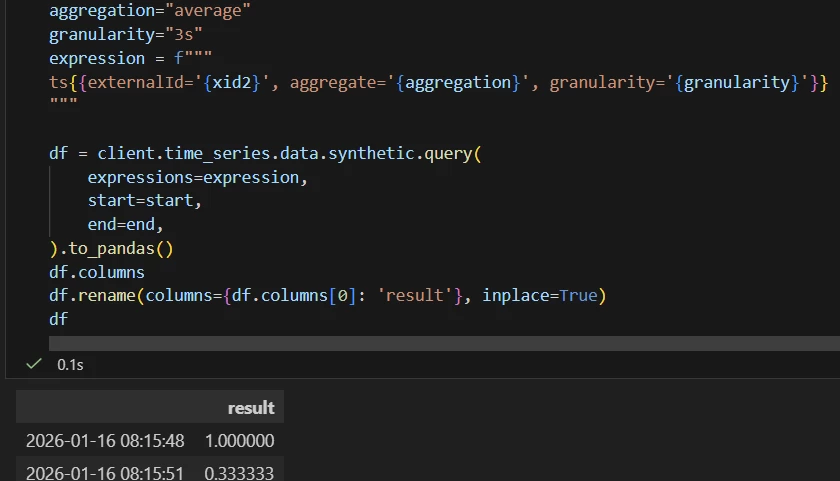
Not ok, why the result is not 2 groups : from 46 to 49 then 49 to 52 ?
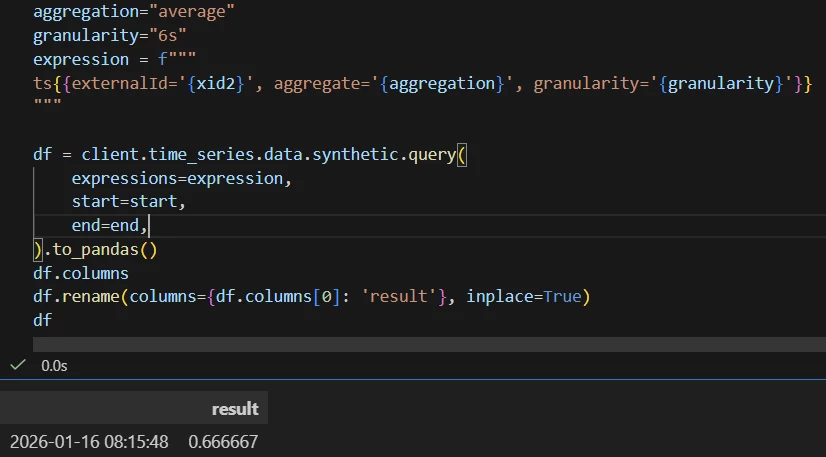
another wrong example
Why the start timestamp is 48 and not at 46 ?
Again, the timeseries endoint is good :
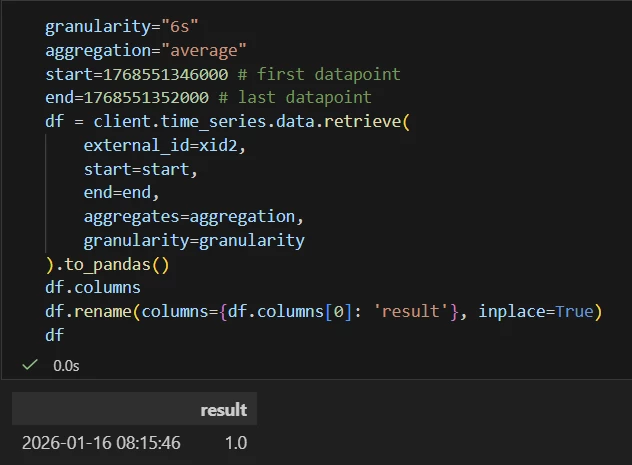
I have lost hope.
If anyone has anything to try or an explanation, i’ll be grateful.
Thanks in advance,
Pierre

Best answer by matiasholte
Hi Pierre! You have correctly identified a difference between synthetic time series and regular data point retrieval.
The key difference is that regular aggregates align to start (rounded to granularity unit, 3s aligns to a whole second). Synthetic time series, on the other hand, align to epoch. So a 3s aggregate will start at a multiple of 3s since epoch (midnight Jan 1st 1970 in UTC).
So for your expression, the first multiple of 6s is at 08:15:48.
If you want to override this behaviour, follow the link to see how you can override the behaviour (in your case, set the alignment parameter to start time)
(The solution with alignment was added to allow for consistent aggregate borders across paging) Hope this helps
Hi Pierre! You have correctly identified a difference between synthetic time series and regular data point retrieval.
The key difference is that regular aggregates align to start (rounded to granularity unit, 3s aligns to a whole second). Synthetic time series, on the other hand, align to epoch. So a 3s aggregate will start at a multiple of 3s since epoch (midnight Jan 1st 1970 in UTC).
So for your expression, the first multiple of 6s is at 08:15:48.
If you want to override this behaviour, follow the link to see how you can override the behaviour (in your case, set the alignment parameter to start time)
(The solution with alignment was added to allow for consistent aggregate borders across paging) Hope this helps